Fernando, a young ballet dancer from Mexico, dreams of international fame and a life in the USA. Hoping that his lover Jennifer, a wealthy socialite heiress and philanthropist, will support him financially, he leaves everything behind and nearly loses his life whilst crossing the border. But his arrival throws the world Jennifer has so carefully built around herself into disarray. She will do anything to save their future together – but also the life she has built for herself.
Credits:
MX 2025, 100 mins, English, Spanish with English subtitles, Director: Michel Franco Cinematography: Yves Cape Editing: Michel Franco, Oscar Figueroa Jara starring Jessica Chastain, Isaac Hernández, Rupert Friend, Marshall Bell, Eligio Meléndez, Mercedes Hernández
‘A film that looks back at the past to warn of the future, from the perspective of a little boy.’ – James Benning
‘Little Boy’ – that was the name the Americans gave to the Hiroshima atomic bomb. But little boys also play with toys such as the model kits that play a central role in Benning’s film. For the duration of each pop song – which comments on the film’s themes – different hands paint the model parts, followed by a shot of the finished model: predominantly small industrial buildings, whose company signs refer to US defence contractors. Political speeches are also heard; among other things, they deal with rearmament, environmental destruction and the nuclear arsenal. “It’s late,” sings Ricky Nelson. Benning hopes, more clearly than ever before, that it is not yet too late.” (Lars Penning)
Credits:
US 2025, 74 mins, English with German subtitles Directed by James Benning starring Johnan Jahromi, Alessandro Streccioni, Yusef Ferguson, Yuan Gao, Nelson De Los Santos, Calum Walter, Nathan Meier, James Benning
Raúl is a cult filmmaker in the midst of a creative crisis. When tragedy strikes one of his closest collaborators, he draws inspiration from it to write his next film. Little by little, he imagines Elsa, a filmmaker in the midst of writing a script, whose journey begins to mirror his own. The two filmmakers become two sides of the same character, in a game of mirrors where the raw honesty of autofiction reveals as much as it destroys. But how far can one go to tell a story?
Credits:
Amarga Navidad ES 2026, 111 Min., spanische OmU Regie: Pedro Almodóvar Kamera: Pau Esteve Birba Schnitt: Teresa Font mit Bárbara Lennie, Leonardo Sbaraglia, Aitana Sánchez-Gijón und Victoria Luengo.
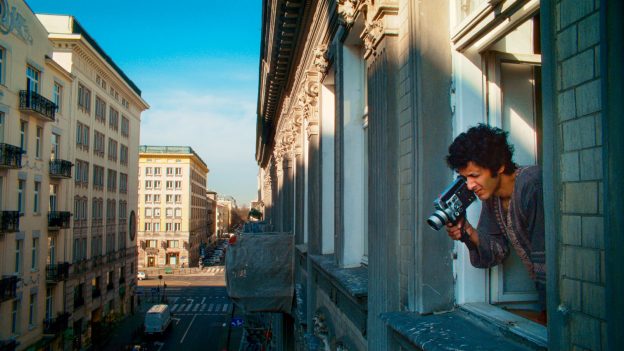
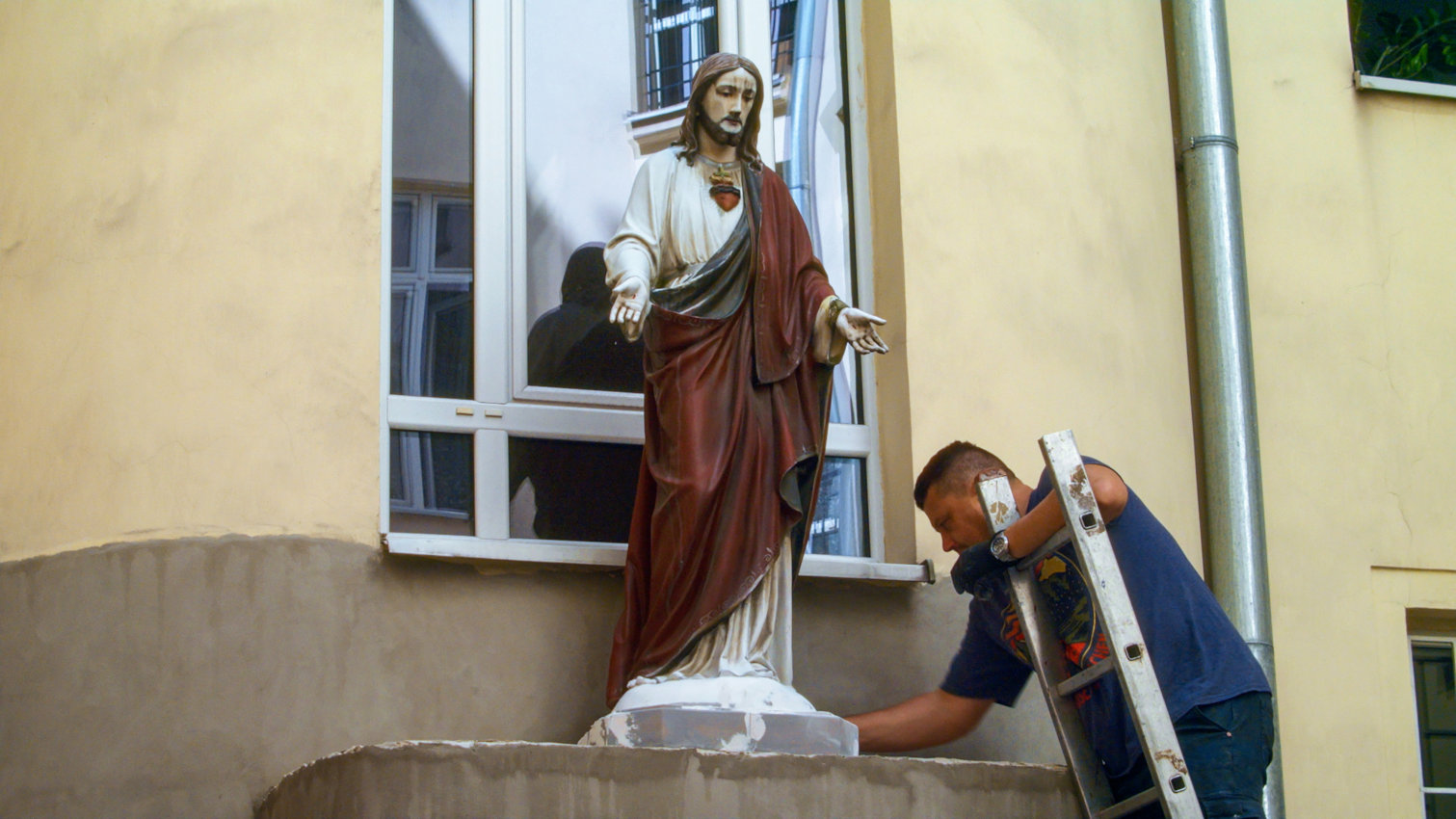
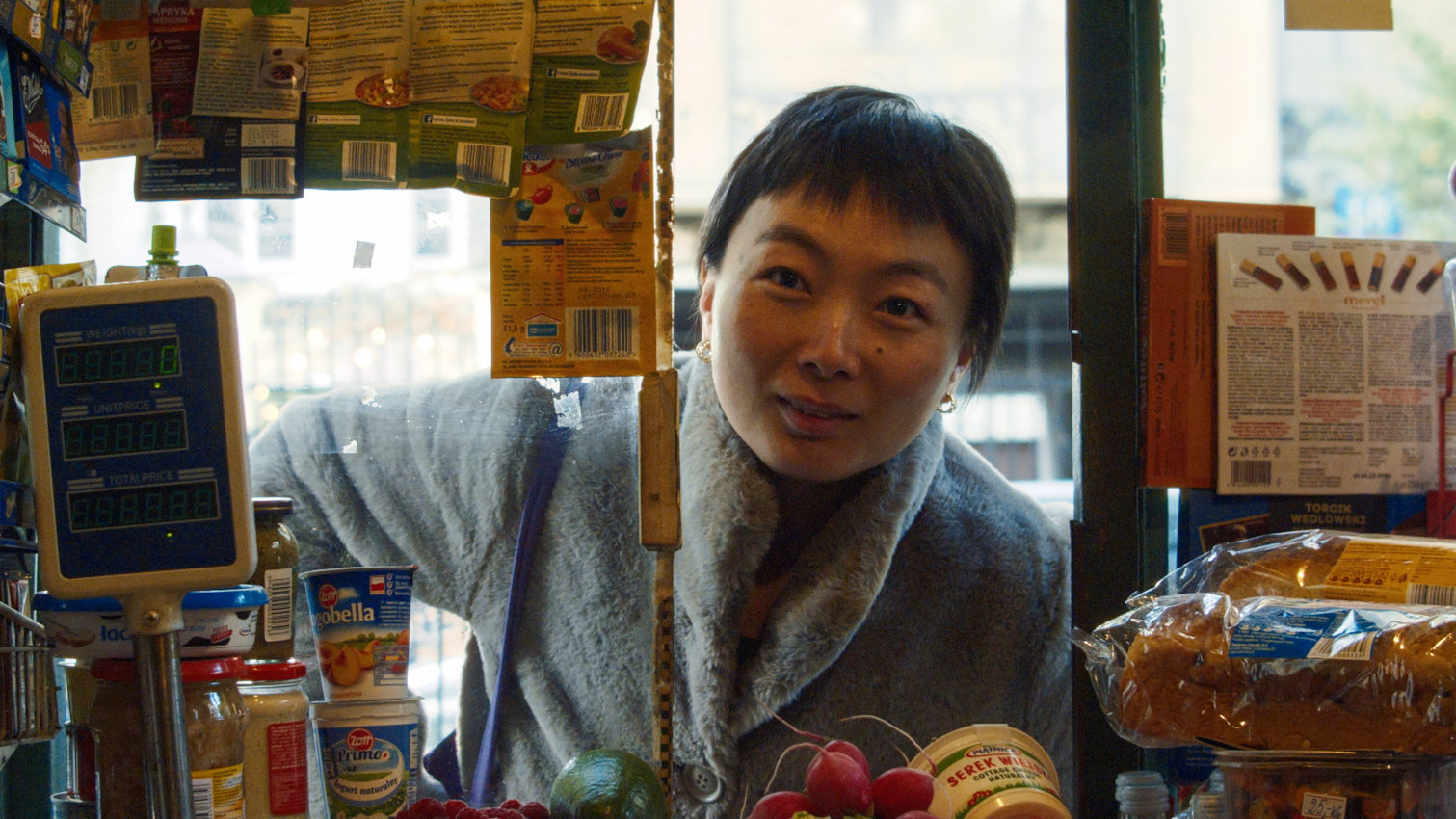
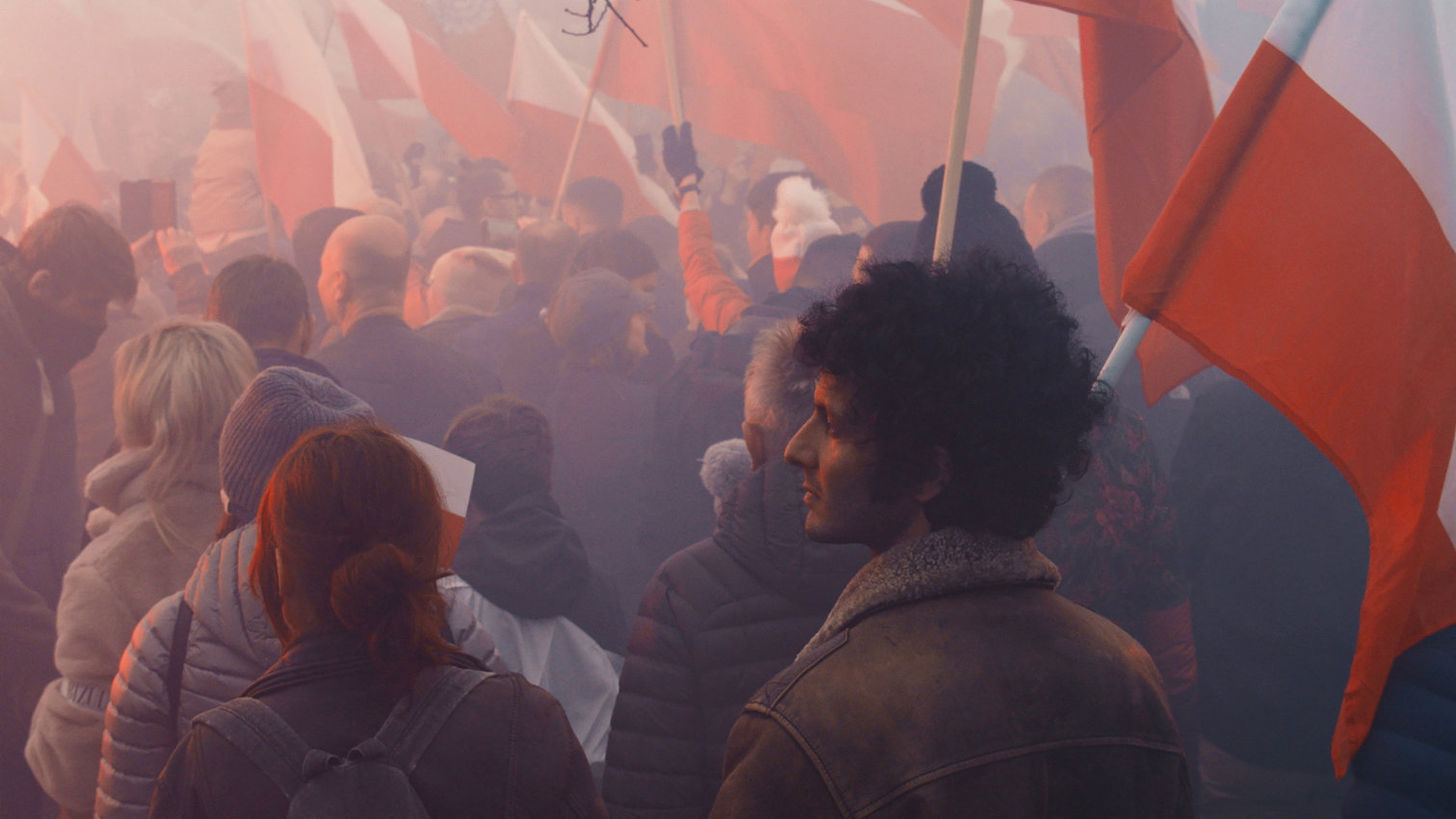
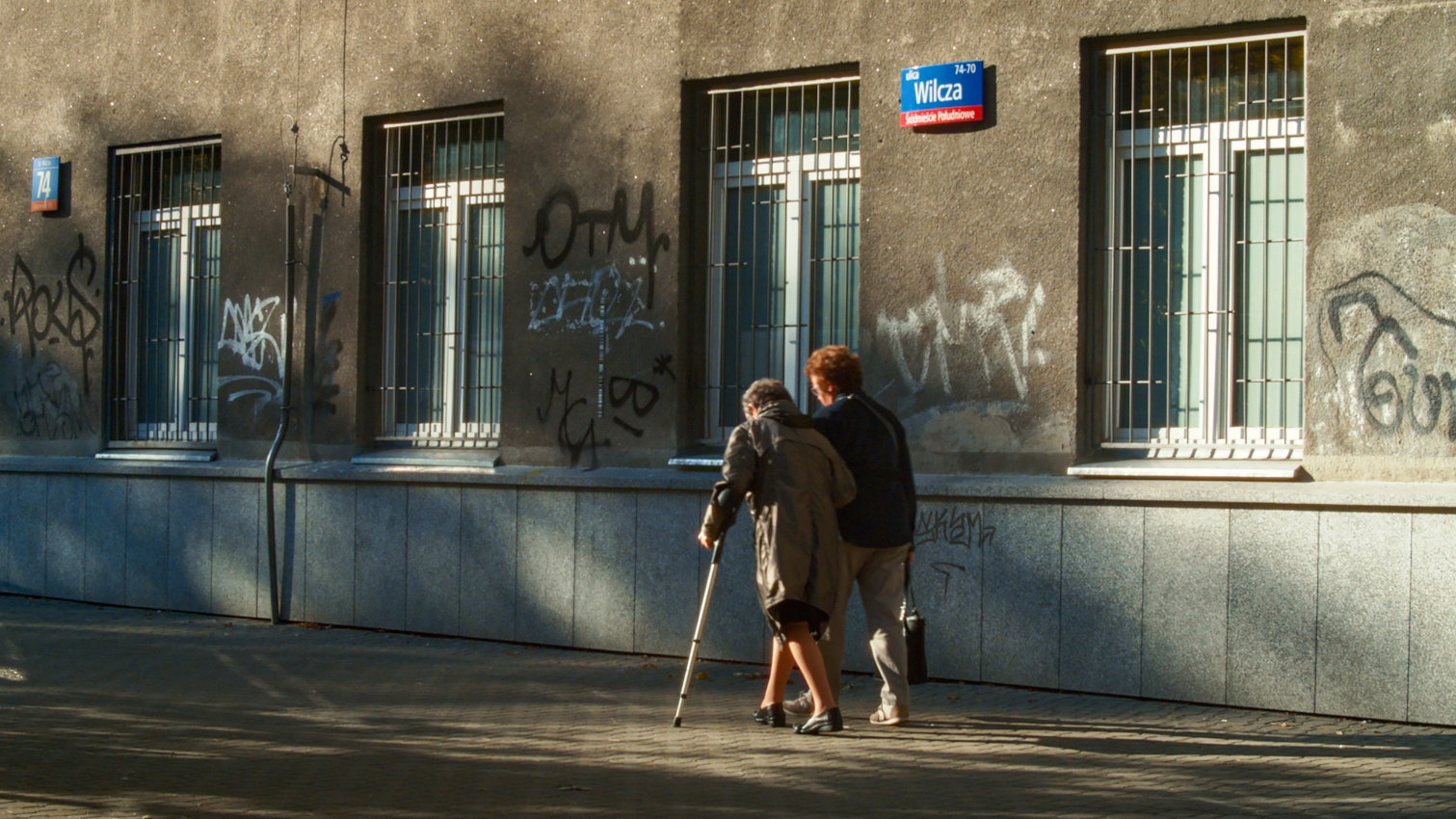
A street in central Warsaw is the focus of this witty and personal portrait of Poland. Filmmaker Arjun Talwar immigrated to the country a decade ago but still struggles to fit in. Ulica Wilcza, the street where he lives, has not really helped matters. In an attempt to accelerate his integration, he begins filming his neighbours, sounding out his relationships with them and seeking ways to overcome his own feelings of alienation. With the help of his friend Mo, another immigrant-turned-filmmaker, Arjun uncovers the hidden secrets of the street, revealing a host of charming inhabitants. He finds other people like himself who are living between the past and present, between an imagined homeland and the real one. The street connects them all like an invisible thread, offering solace in the melancholy of everyday life. Along this kilometre-long stretch, a picture of modern Europe emerges, exposing a kaleidoscope of contradictions and anxieties as a foreign filmmaker holds up a mirror to a country that is often perceived as homogeneous, unwelcoming and politically right-wing.
PERSEPOLIS was one of the most successful films shown in our cinema. Last week, the author and director, Marjane Satrapi, passed away at the age of just 56. For this reason, we are bringing the film back into our programme after 19 years.
The film adaptation of the comic book of the same name. “The film tells the story, in simple, almost entirely black-and-white images, of the little girl Marjane, who grows up in Tehran, goes to school in Austria, returns to Iran for a while, and then goes into exile in Paris for good. The story begins with the ousting of the Shah, continues through the betrayed hopes of the revolution to the war between Iran and Iraq, and ends with the tyrannical rule of the mullahs – all seen through the eyes of the adolescent. It is the author’s perspective, as she tells her own story in her immensely successful comics: clever, witty, self-deprecating, and at times deeply sad. Instead of using digital animation techniques, the film was drawn entirely by hand. That is why it actually looks like Marjane Satrapi’s books in motion.” Verena Lueken
“In the 1980s, when Iran was fighting Iraq, many upper-middle-class parents sent their children from Tehran to the West for their education, including my family. In Austria, my first stop, I often had to explain that my father didn’t have three wives and why I didn’t ride a camel at home. They were surprised that I’d already been skiing and had drunk alcohol. Just imagine: you come from Tehran, which was already very modern at the time, to a small Austrian village – and here they explain modernity to you. They didn’t even have a cinema in the village!” Marjane Satrapi
Credits:
Fr 2007, 96 Min., frz. OmU Regie: Marjane Satrapi / Vincent Paronnaud Nach den gleichnamigen Comics von Marjane Satrapi Originalstimmen: Gabrielle Lopes, Chiara Mastroianni, Catherine Deneuve, Danielle Darrieux, Simon Abkarian, François Jerosme
„Preis der Jury“ – Cannes 2007
Trailer:
PERSEPOLIS4K Restaurierung | Trailer Deutsch | Neu auf 4KUHD, Blu-ray, DVD und Digital!
Im Kino in französisch mit deutschen Untertitlen.
A young Kurdish woman in Syria leads a women’s unit into battle against ISIS—fighting for freedom and women’s rights. Her struggle is narrated by a Yazidi survivor who was enslaved by ISIS as a child and makes clear what is at stake if this fight is lost. And while she survived the horror, a German woman voluntarily joined ISIS—and is now at the mercy of the consequences of her decision. Three women, three decisions, a reflection of courage, suffering, and dangerous delusion.
Whilst preparing for her appearance on a television talent show, Lea (Frida Hornemann) is asked why she thinks she is something quite special. She doesn’t have an answer. Her parents are separated. Whilst her father Matze (Max Riemelt) supports her dream of a stage career, she regularly clashes with her mother Rieke (Gina Henkel). Lea lives with her grandparents Christel (Rahel Ohm) and Friedrich (Peter René Lüdicke), who run a guesthouse on their farm in the heart of idyllic Thuringia. Guests are few and far between. Instead, a right-wing populist party wants to book the place for a conference, which particularly displeases Lea’s rebellious brother. The 16-year-old’s only true confidante is her aunt Kati (Eva Löbau), who has moved back to her hometown from the West to run the newly renovated City Palace as a GDR museum. When Kati walks through the exhibition with her mother in tow as part of the funding committee, and Christel sees her life on display, it is one of the film’s most powerful scenes. How can it be that millions are being spent on this past – which she would dearly love to forget – whilst she herself is on the brink of bankruptcy? The writer and director Eva Trobisch, who was born and raised in East Berlin, carefully arranges her cast of characters to play out the conflicts between the generations. With keen observation and sharp dialogue, she portrays German-German sensibilities.” Indiekino
“It is never the really big dramas, the truly terrible tragedies, that Eva Trobisch tells of, but rather the stories that simply happen to someone, even though everything was actually planned quite differently. This casual tone, which incorporates many small observations and a keen eye for detail, may seem a little unfocused at first glance; yet beneath the lightly sketched episodes and storylines, and the film’s meandering gaze, there is more than one might initially think.” Joachim Kurz | Kinozeit
Credits:
DE 2026, 116 mins, original German version with English subtitles Director: Eva Trobisch Cinematography: Adrian Campean Editing: Laura Lauzemis starring Frida Hornemann, Max Riemelt, Eva Löbau, Gina Henkel, Rahel Ohm, Peter René Lüdecke, Florian Geißelmann, Yvon Sable Moltzen, Ida Fischer, Florian Lukas, Thomas Schubert, Kara Schröder, Anne Kulbatzki, Nairi Hadodo
The film opens with death, portrayed with complete calm and without sentimentality. Then the grieving process begins, depicted with sensitivity, not without moments of apparent callousness, which are not, however, taken amiss, but rather – like everything else, in fact – told with infinite tenderness. The overwhelming sense of being overwhelmed, the loneliness, the unreasonable demands: “This existential feeling of being abandoned by the world and lost in it, of being cut off” (Joachim Kurz) This unique film also deals with this – on its meta-level, so to speak. Lore accompanies her mother as she dies. She returns to the small town of her childhood, Erkelenz, where many acquaintances and relatives still live who speak the Rhineland dialect. Dealing with death and the grieving process are the film’s central themes. Yet it is the way the story is told that makes this film truly outstanding. Naturally, melancholy sets the tone, but any potential for sentimentality is completely undermined by the neorealist narrative style, to which the endearing performances of the many amateur actors also contribute. Alongside this, and in a completely unobtrusive manner, the story is set during the pandemic. Embedded within the narrative, it forms a kind of background noise, further reinforcing the sense of loneliness and abandonment and thus reflecting the general state of society. P.S. According to the Catholic Church, a ‘six-week mass’ is a service celebrated six weeks after a death, marking the end of the first phase of mourning for the bereaved.
Credits:
DE 2025, 98 Min., In German with English subtiles Regie: Jacqueline Jansen Kamera:Markus Ott Schnitt: Simon Dopslaf, Jacqueline Jansen mit Magdalena Laubisch, Gerta Gormanns, Lola Klamroth, Olga Prokot, Suzanne Ziellenbach, Marc Fischer,
Anna and Charlotte are constantly competing with each other. At least, that’s how their mother, Ines, wants it—she favors one over the other and makes sure the other one knows it. Nevertheless, the dissimilar sisters—one queer and nonconformist, the other a supposedly tough, successful woman—return to their childhood home in northern Germany. Old wounds are reopened and well-kept secrets come to light: Whose ashes is their mother hiding? What connects her to a Hungarian donkey farm? In their search for answers, the dissimilar sisters find new trust in one another.
A black comedy of the petty nastinesses found only within families. In her second feature film, director Rosanne Pel explores with subtle humor the often problematic relationships between mothers, sisters, and daughters—and the societal role models that underlie them. “Donkey Days” is a modern, beguilingly absurd family film brimming with empathy for its characters.
Credits:
NL/DE 2025, 108 Min., Original version in German, English, and Dutch, some with German subtitles Regie: Rosanne Pel Kamera: Aafke Beernink Schnitt: Xander Nijsten mit Jil Krammer, Susanne Wolff, Hildegard Schmahl, Amke Wegner, Carla Juri
Sandra Hüller portrays Ingeborg Bachmann on an imaginary day in Rome. Regina Schilling’s hybrid film weaves together reenactments, archival footage, and Bachmann’s own writings into a portrait that offers a refreshing new perspective on the author and positions her writings as a reference point in current debates on gender relations and power. P.B (DOKFest München)
Credits:
DE/AT 2026, 95 Min., German OV with English subtitles Regie: Regina Schilling Kamera: Johann Feindt Schnitt: Carina Mergens mit: Sandra Hüller
Trailer:
Ingeborg Bachmann – Jemand, der einmal ich war | Offizieller Trailer | Jetzt im Kino
Wir verwenden Cookies, um unsere Website und unseren Service zu optimieren.
Funktionale Cookies
Always active
Die technische Speicherung oder der Zugang ist unbedingt erforderlich für den rechtmäßigen Zweck, die Nutzung eines bestimmten Dienstes zu ermöglichen, der vom Teilnehmer oder Nutzer ausdrücklich gewünscht wird, oder für den alleinigen Zweck, die Übertragung einer Nachricht über ein elektronisches Kommunikationsnetz durchzuführen.
Vorlieben
Die technische Speicherung oder der Zugriff ist für den rechtmäßigen Zweck der Speicherung von Präferenzen erforderlich, die nicht vom Abonnenten oder Benutzer angefordert wurden.
Statistiken
Die technische Speicherung oder der Zugriff, der ausschließlich zu statistischen Zwecken erfolgt.Die technische Speicherung oder der Zugriff, der ausschließlich zu anonymen statistischen Zwecken verwendet wird. Ohne eine Vorladung, die freiwillige Zustimmung deines Internetdienstanbieters oder zusätzliche Aufzeichnungen von Dritten können die zu diesem Zweck gespeicherten oder abgerufenen Informationen allein in der Regel nicht dazu verwendet werden, dich zu identifizieren.
Marketing
Die technische Speicherung oder der Zugriff ist erforderlich, um Nutzerprofile zu erstellen, um Werbung zu versenden oder um den Nutzer auf einer Website oder über mehrere Websites hinweg zu ähnlichen Marketingzwecken zu verfolgen.