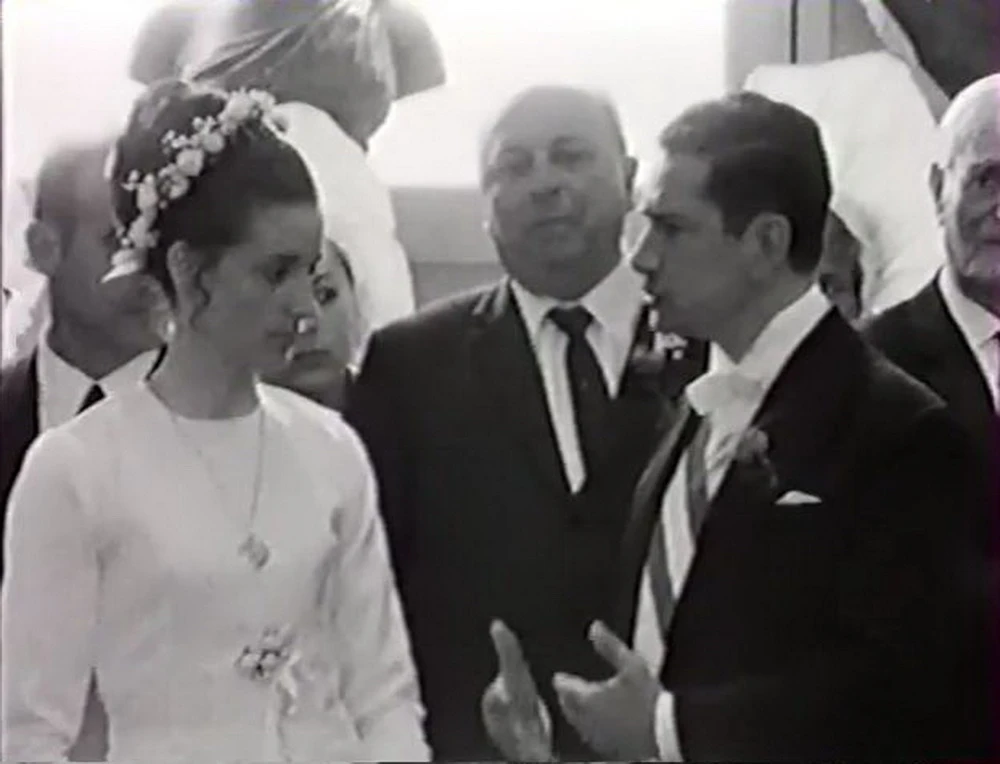
Two documentaries about the election and the festival of the Rose Queen in Pessac, near Bordeaux, which take place every year in April and June. The compilation does not take an explicit stance on the events; its straightforward documentation, filmed in 1968 and eleven years later, highlights the changes that have taken place. FR 1968. Director: Jean Eustache. 65 Min. French with German subtitles & FR 1979. Director: Jean Eustache. . 67 Min. French with German subtitles
UNESALEHISTOIRE (1977) consists of two films: first, a 16mm film was made in the style of cinéma vérité, in which a man recounts his voyeuristic experiences in the toilet of a Parisian café, where he discovered a hole in the wall leading to the ladies’ toilet. Eustache later had his text narrated by a professional actor, shot on 35mm. However, the films are screened in reverse order, with the fiction shown before the documentary – which naturally raises the question of what is real and what is not in the story told by Picq. In this way, Eustache succeeded in creating a unique reflection on the relationship between the documentary and the fictional. FR 1977. Director: Jean Eustache; Film 1: Cast: Michael Lonsdale. 28 Min. frz. OmU, Film 2: Cast: Jean-Noël Picq. 22 Min. frz.. OmU
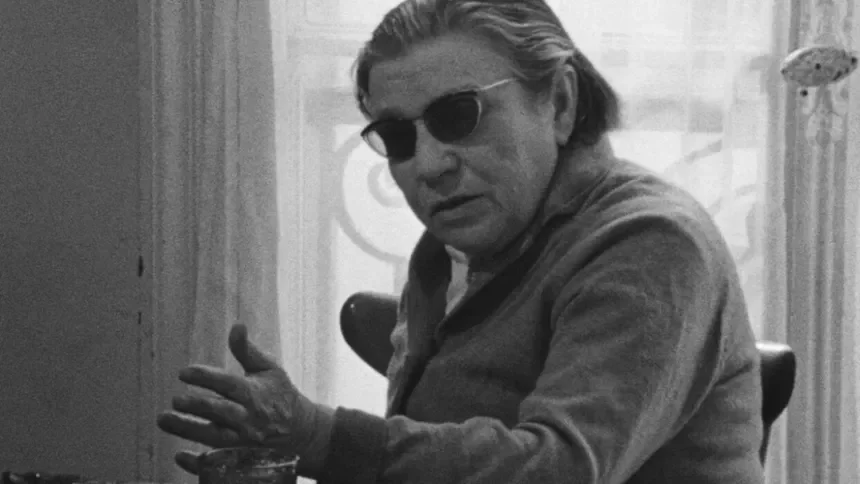
NUMÉROZÉRO (1971) – the title refers to a kind of starting point, and indeed, Eustache has, in cinematic terms, started afresh here: he lets his grandmother, Odette Robert, recount her life, interrupted only by brief questions or comments from Eustache to keep the conversation flowing. FR1971⁄2002. Director: Jean Eustache. Cast: Odette Robert, Jean Eustache, Boris Eustache. 110 Min. french OmU
A summer of innocence comes to an abrupt end. Thirteen-year-old Daniel is torn from his sheltered country life and thrust into the confines of the city, where he is confronted with the harsh realities of the adult world. Instead of school and friendships, his daily life is dominated by work, social indifference and his first encounters with sexuality. As part of Jean Eustache’s autobiographically influenced body of work, the film distils personal memories into an observant portrayal of coming of age and a youth that vanishes before it has a chance to develop.
Credits:
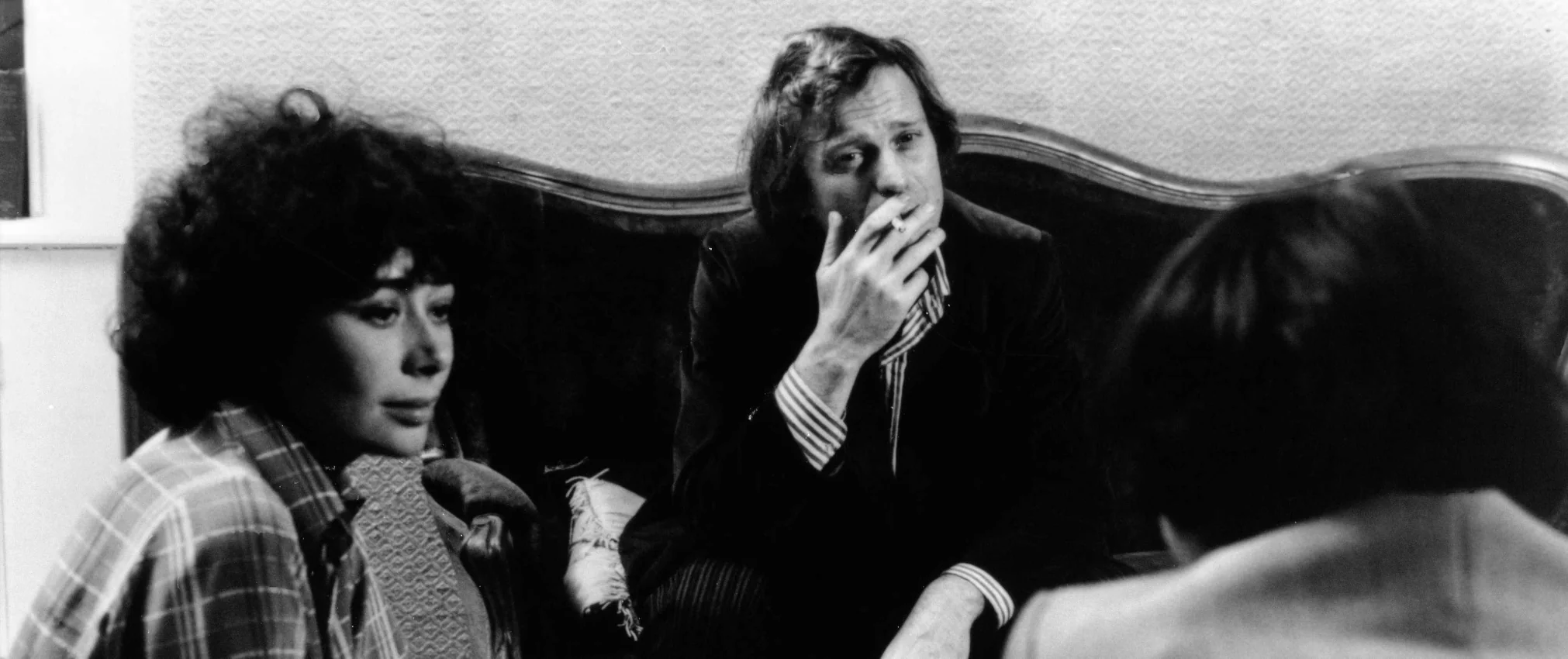
FR 1974, 123 mins, French with original subtitles Director: Jean Eustache Cinematography: Nestor Almendros, Editing: Françoise Belleville, Alberto Yaccelini, Vincent Cottrell, Jean Eustache starring Martin Loeb, Ingrid Caven, Jacqueline Dufranne, Dionys Mascolo, Henri Martinez, Jean-Noël Picq, Maurice Piala
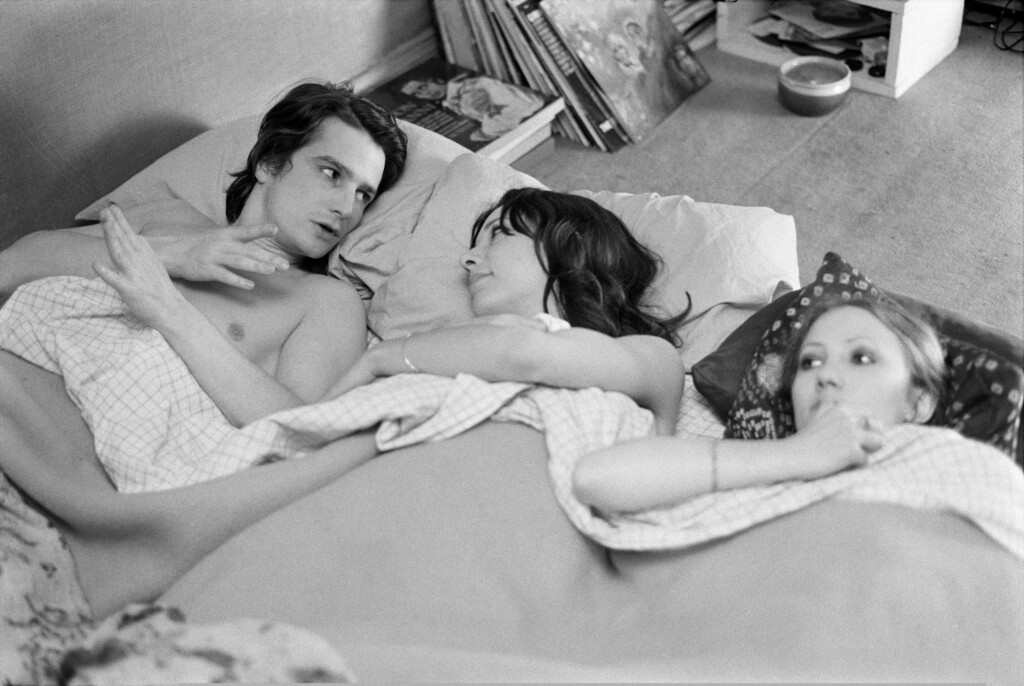
An aimless flâneur (Jean-Pierre Léaud) spends his days divided between two women, endless conversations in Parisian cafés and a search for his true self. At the heart of the film is a love triangle in the aftermath of the upheavals of 1968, which unfolds with direct candour, navigating the terrain between self-presentation, desire and emotional cruelty. A work that remains challenging to this day, exploring love, language and the impossibility of finding common ground.
Credits:
FR 1973, 215 mins, French with original subtitles Director: Jean Eustache Cinematography: Pierre Lhomme Editing: Jean Eustache, Denise de Casabianca Starring Jean-Pierre Léaud, Françoise Lebrun, Bernadette Lafont, Isabelle Weingarten
When Lisa, a young sports photographer, goes missing, her father decides to search for her and sets off on a journey through Georgia with her best friend, the mysterious Levani. Lisa had most recently been photographing football stadiums across the country. As the landscape passes by and they move from one football pitch to the next, the people and their stories change. Yet with every football pitch and every village, the chances of finding Lisa seem to dwindle…
With his new road movie, Alexandre Koberidze continues his poetic exploration of his homeland, Georgia, following on from WASSEHENWIR, WENNWIRZUMHIMMELSCHAUEN?
Credits:
DE/GE 2025, 186 mins, Georgian version with German subtitles Director, cinematography, editing: Alexandre Koberidze starring: David Koberidze, Otar Nijaradze, Irina Chelidze, Giorgi Bochorishvili, Vakhtang Panchulidze, Manu Tavadze
Wir verwenden Cookies, um unsere Website und unseren Service zu optimieren.
Funktionale Cookies
Always active
Die technische Speicherung oder der Zugang ist unbedingt erforderlich für den rechtmäßigen Zweck, die Nutzung eines bestimmten Dienstes zu ermöglichen, der vom Teilnehmer oder Nutzer ausdrücklich gewünscht wird, oder für den alleinigen Zweck, die Übertragung einer Nachricht über ein elektronisches Kommunikationsnetz durchzuführen.
Vorlieben
Die technische Speicherung oder der Zugriff ist für den rechtmäßigen Zweck der Speicherung von Präferenzen erforderlich, die nicht vom Abonnenten oder Benutzer angefordert wurden.
Statistiken
Die technische Speicherung oder der Zugriff, der ausschließlich zu statistischen Zwecken erfolgt.Die technische Speicherung oder der Zugriff, der ausschließlich zu anonymen statistischen Zwecken verwendet wird. Ohne eine Vorladung, die freiwillige Zustimmung deines Internetdienstanbieters oder zusätzliche Aufzeichnungen von Dritten können die zu diesem Zweck gespeicherten oder abgerufenen Informationen allein in der Regel nicht dazu verwendet werden, dich zu identifizieren.
Marketing
Die technische Speicherung oder der Zugriff ist erforderlich, um Nutzerprofile zu erstellen, um Werbung zu versenden oder um den Nutzer auf einer Website oder über mehrere Websites hinweg zu ähnlichen Marketingzwecken zu verfolgen.