![[:de]fsk Kino Logo[:]](https://fsk-kino.peripherfilm.de/wp-content/uploads/2022/08/kino-fsk-logo-dark.png.webp)
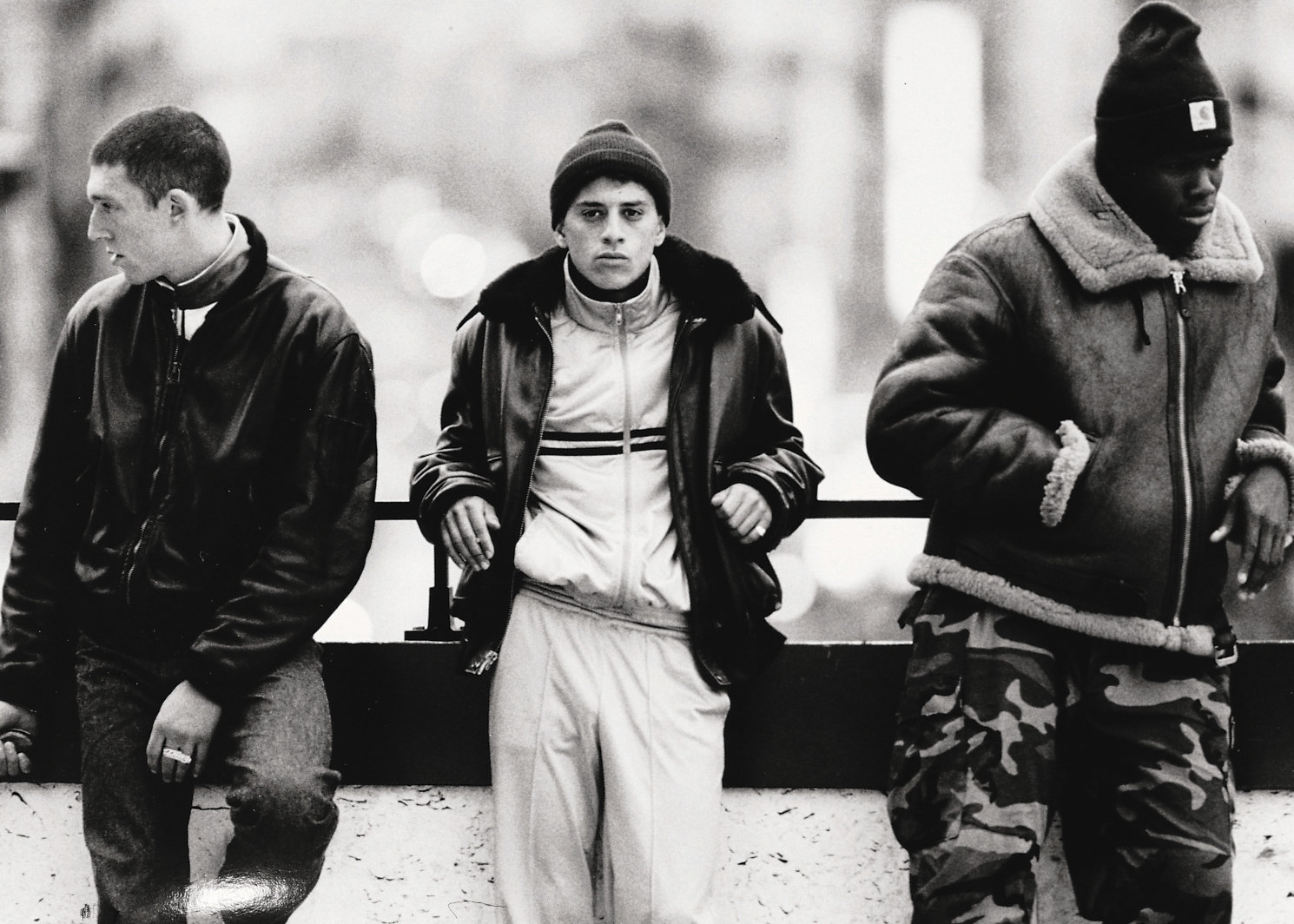
Ein Film von Mathieu Kassovitz. Wiederaufführung.
[Credits] [Tickets & Termine] [Trailer]
Eine Geste aus diesem Film wird man so schnell nicht vergessen. Es ist die wie eine Pistole mit ausgestreckten Fingern in Anschlag gebrachte Hand von Vinz, die immer wieder an die Möglichkeit des Ausbruchs explosiver Gewalt erinnert. Wie viele andere Aktionen in dem Film ist diese Geste sowohl Imponiergehabe, Pose und Spiel als auch tatsächliche Bedrohung. Immer ist die Gefahr gegenwärtig, daß das Spiel plötzlich und unumkehrbar furchtbare Zerstörungskräfte auslöst. Es geht um 24 Stunden des Lebens von drei jungen Männern aus der ‚cite‘ ( einer Trabantenstadt an der Peripherie von Paris ). Einer von ihnen wird am Ende tot sein.” Weniger ein brutaler Film, als vielmehr ein neuer ‚film noir‘. – Wer ’71 Fragmente…‘ nicht mochte (und das, so befürchte ich, wird die Mehrheit sein), wird diesen Film sehr mögen, die anderen werden ihn vielleicht als ein wenig zu didaktisch empfinden. Aber wahrscheinlich ist dieser Vergleich auch ziemlich blöd. (fsk Programmhefttext von 1995)
„Die Wucht, mit der Kassovitz den Zuschauer in die Auseinandersetzungen der drei Freunde zieht, resultiert aus der filmischen Gestaltung, aber auch aus dem hervorragenden Spiel der drei Hauptdarsteller, die der Geschichte hohe Authentizität verleihen. Schwarzweiße Bilder, harte Schnitte und die ausschließliche Verwendung von Originaltönen erzeugen einen bedrängenden Alltagsrealismus, der nicht nur den „sozialen Riß” durch die französische Gesellschaft spürbar macht, sondern auch ein Gefühl für die Ausweglosigkeit seiner Helden vermittelt. Wie sehr es dem 27jährigen Kassovitz trotz seiner ungeteilten Sympathie für die Bewohner der Banlieue doch gelingt, die Balance zwischen Parteilichkeit und Stilisierung zu halten, wird immer wieder in einzelnen Einstellungen deutlich, in denen sich seine Intentionen zur Metapher verdichten. Als Vinz den beiden Gefährten zum erstenmal die Pistole zeigt, schrecken diese zurück und weisen ihn ab, indem sie davonlaufen; dabei isoliert die Kamera den kahlköpfigen Vinz, der selbstvergessen über die Waffe streicht und plötzlich hochschreckt, als er merkt, daß er allein ist. Das schönste Bild, das Kasssovitz für die überlebensnotwendige Solidarität untereinander findet, ist dezent an den Rand gesetzt: nachdem Saïd und Hubert verhaftet, gequält und erniedrigt, dann aber wieder freigelassen wurden und im mondänen Stadtzentrum auch Vinz wiedergefunden haben, wandelt Saïd im Vorbeigehen mit der Sprühdose einen Werbeslogan ab: Die Welt ist nicht mehr „dein”, sondern „unser”: Miteinander, nicht getrennt können sie dem Morgen entgegensehen. Doch da flimmert über eine riesige Videowand die Nachricht vom Tod Abdels.” Josef Lederle | filmdienst


Credits:FR 1995, 98 Min., franz. OmU
Regie und Buch: Mathieu Kassovitz
Kamera: Pierre Aïm
Schnitt: Mathieu Kassovitz, Scott Stevenson
mit: Vincent Cassel, Hubert Kounde, Said Taghmaoui
Trailer:nach obenA film by Mathieu Kassovitz. Re-release. In French with German subtitles.
[Credits] [Tickets & Termine] [Trailer]
La Haine opens with a montage of news footage depicting urban riots in a banlieue in the commune of Chanteloup-les-Vignes near Paris. In the aftermath of the riots, a local man named Abdel Ichaha is gravely injured in police custody and is in intensive care. The riots escalate, leading to a siege of the local police station and the loss of a police officer’s revolver. The film follows the lives of three friends of Abdel, who are all young men from immigrant families, over approximately twenty consecutive hours.
Vinz, a young Jewish man with an aggressive temperament, seeks revenge for Abdel’s condition. He harbors a deep hatred for all police officers and secretly emulates Travis Bickle from Taxi Driver in front of his bathroom mirror. Hubert, an Afro-French boxer and small-time drug dealer, aspires to escape the banlieue and create a better life for himself. However, his boxing gymnasium was destroyed in the riots. Saïd, a young North African Muslim, acts as a mediator between Vinz and Hubert who constantly argue.
The three friends lead a directionless daily routine and frequently find themselves under police surveillance. At a rooftop party which is broken up by the police, Vinz insults a plainclothes police officer. After the trio leaves, Vinz reveals that he has discovered the .44 Magnum revolver lost during the riot. He plans to use it to kill a police officer if Abdel dies. While Hubert disapproves, Vinz secretly takes the gun with him. They try to visit Abdel in the hospital but are stopped by the police. Saïd is arrested after they aggressively refuse to leave, but he is later released with the assistance of a police officer who knows his brother.
A disagreement arises between Vinz and Hubert regarding their perspectives on policing and violence, leading them to part ways temporarily. Saïd accompanies Vinz, while Hubert briefly returns home. They reunite at another gathering in the banlieue, which quickly descends into chaos when Abdel’s brother attempts to murder a police officer as an act of revenge. This triggers a confrontation with the police, and the group narrowly escapes after Vinz almost shoots a riot officer. They board a train to Paris, where their interactions with both friendly and hostile Parisians escalate several situations into dangerous confrontations.
In a public restroom, they encounter a Polish survivor of the gulag who tells them a story about a man who froze to death after he refused to relieve himself in public near the train and then failed to re-board in time. The trio is perplexed by the meaning of the story.
Later, they visit Astérix, a frequent cocaine user who owes money to Saïd. This visit leads to a violent confrontation, as Astérix appears to force Vinz to play Russian roulette, although the gun is secretly unloaded. They encounter sadistic plainclothes police officers who arrest Saïd and Hubert while Vinz manages to escape. The police officers verbally and physically abuse the duo before imprisoning them until late at night, causing the three friends to miss the last train from Saint-Lazare station and spend the night on the streets.
After being kicked out of an art gallery and failing to hotwire a car, the trio takes shelter in a shopping mall. They hear from a news broadcast that Abdel has died. They make their way to a rooftop, where they insult skinheads. However, they encounter the same group of skinheads who mercilessly attack Saïd and Hubert. Vinz intervenes, holding one of the skinheads at gunpoint. Despite Hubert pushing Vinz to execute him, Vinz hesitates and ultimately lets the skinhead go.
In the early morning, the trio returns home, and Vinz hands the gun over to Hubert. Vinz and Saïd encounter the officer whom Vinz had insulted at the rooftop party. The officer seizes Vinz, threatening him with a loaded gun against his head. Hubert rushes to their aid, but the officer accidentally discharges his gun, killing Vinz. A tense standoff ensues between Hubert and the officer, as Saïd closes his eyes. A single gunshot is heard, leaving it unclear who fired the shot or who may have been struck.
This climactic standoff is accompanied by a voice-over of Hubert’s slightly modified opening lines („It’s about a society in free fall…”) and the recurring phrase jusqu’ici tout va bien („so far so good”). The film portrays a microcosm of French society’s descent from hostility into senseless violence, emphasizing that despite appearances, all is not well and the future remains uncertain.
Wikipedia
Credits:FR 1995, 98 Min., franz. OmU
Regie und Buch: Mathieu Kassovitz
Kamera: Pierre Aïm
Schnitt: Mathieu Kassovitz, Scott Stevenson
mit: Vincent Cassel, Hubert Kounde, Said Taghmaoui
Trailer:nach oben