![[:de]fsk Kino Logo[:]](https://fsk-kino.peripherfilm.de/wp-content/uploads/2022/08/kino-fsk-logo-dark.png)
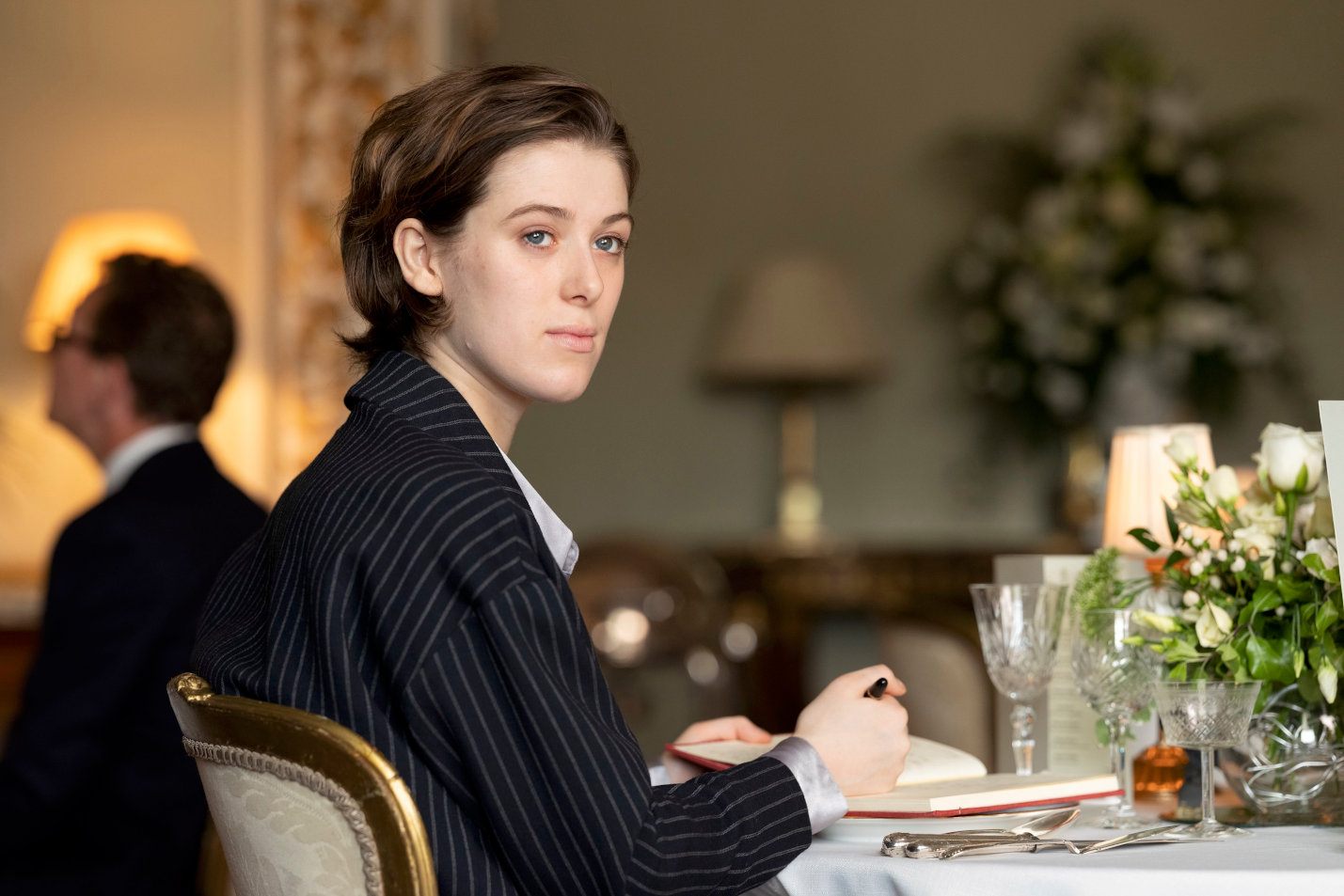
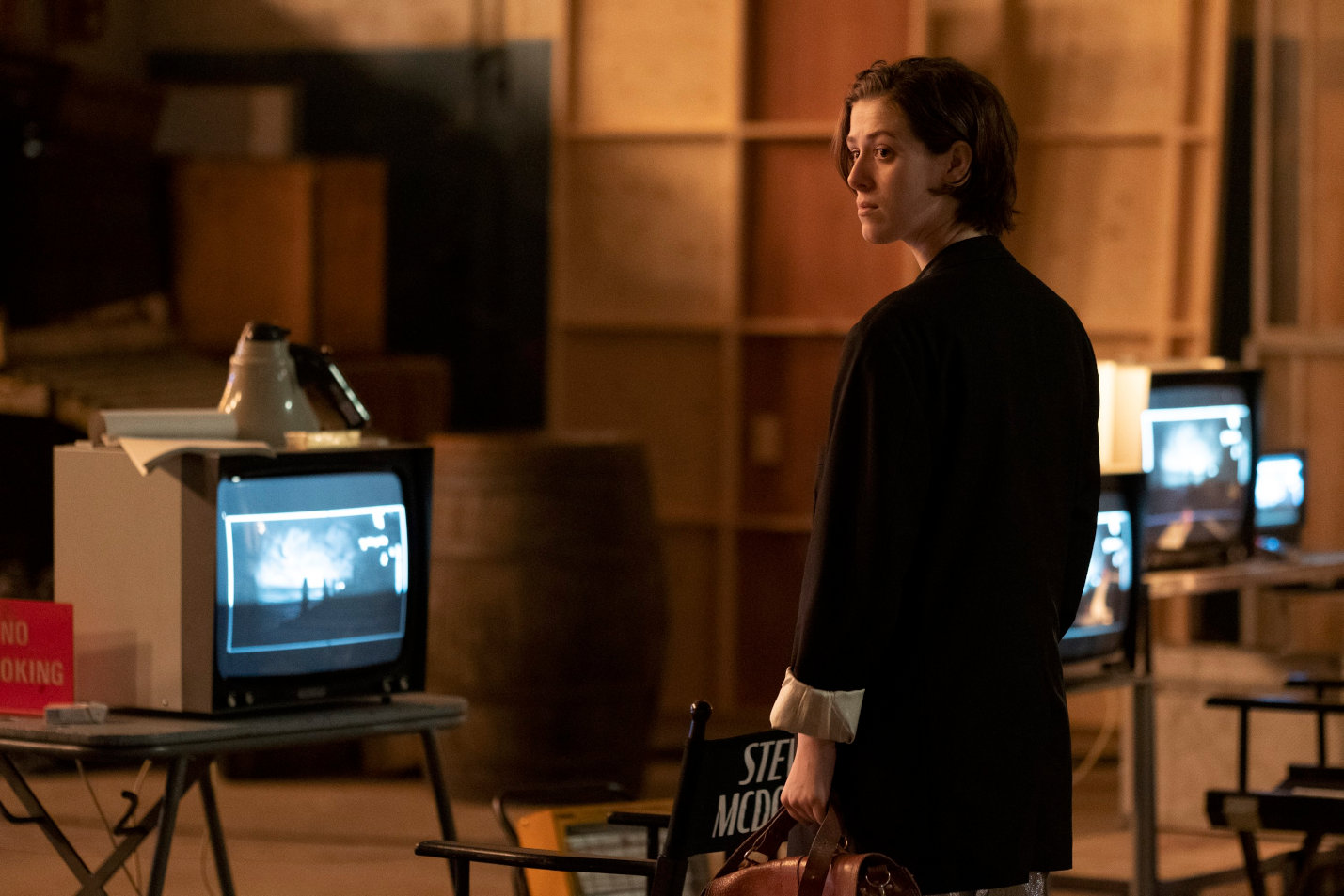
Es ist nur wenig her, dass Julies undurchschaubarer, dandyhafter Geliebter Anthony sich mit einer Überdosis Heroin das Leben nahm, und der Schock sitzt noch tief. Nachdem sie lange Zeit in ihrem Filmstudium nicht sehr engagiert war, überlegt sie nun, ihre Beziehung zum Thema ihrer Abschlussarbeit zu machen. Es wird ein schmerzhafter Prozess. Der Dreh und die Zusammenarbeit mit den Kommiliton*innen laufen suboptimal. Fragen und Kritik kommen nicht nur von der Crew, Julie selbst muss sich ihrer Rolle stellen, sowohl innerhalb der Geschichte als auch als Regisseurin.
„Souvenir I“ handelt vom Auf und Ab einer toxischen Beziehung, Teil II ist aber weit mehr als die Fortsetzung. Wie fragmentierte Erinnerungstücke an die Zeit nach Anthonys Tod setzt sich der Film zusammen, Trauerarbeit und künstlerische Entwicklung gehen Hand in Hand. Julie wird sich selbst bewusster, und der Veränderungen, die sie in ihrem Leben vornehmen muss.
Wie weit das autobiografisch ist, sei dahingestellt, aber um Authentizität geht es Joanna Hogg ohnehin nicht, sondern um die künstlerische Darstellung der eigenen Sicht.
„THE SOUVENIR … ist wohl auch deshalb so großartig, weil eine Filmemacherin hier nichts mehr verarbeitet, sondern die Erinnerung an Erleben und Verarbeitung selbst in einen Film verarbeitet. Und dabei ganz beiläufig nachzeichnet, wie sie selbst zu der Filmemacherin geworden ist, die diesen Film machen konnte und wollte.
Ein Film à la Annie Ernaux: die eigene Geschichte nicht einfach gestehen, sondern zum Anlass nehmen, sich die Welt anzusehen.“ Till Kadritzke | critic.de

Credits:GB 2021, 107 Min., engl. OmU
Regie: Joanna Hogg
Kamera: David Raedeker
Schnitt: Helle le Fevre
Mit Honor Swinton Byrne, Tilda Swinton, James Spencer Ashworth, Alice McMillan, Oli Bauer, Ariane Labed, Richard Ayoade
Trailer:
nach obenIn the second part of her self-exploratory diptych, Joanna Hogg fully realizes the Proustian implications of filming her memories. In the beginning, it seems as if the film just took off where the first one stopped, but instead of moving on with the emotional rollercoaster ride, the mourning echo of Anthony’s absence now takes over and relates all actions to the question asked at the very beginning of the first film: how to film life? How to film what really happened?
As Julia tries to cope with her life and make her graduation film about her relationship with Anthony, we rediscover cinema as a means to heal our wounds, not necessarily because everything works out, but because films and the exhausting ways of making them enable us to find new perspectives on existence. Rarely have the doubts of growing up merged so beautifully with finding one’s voice as an artist, such as in the sequences reminiscent of Hogg’s own first shorts when Julia gets lost in a Cocteau labyrinth of surreal memories and phantasies.
This expressionist outburst stands in stark contrast to the casual and tender observations across the rest of the film, but also presents us with the discovery of a language that crosses the bridge between experience and film. (Patrick Holzapfel)
Credits:GB 2021, 107 Min., engl. OmU
Regie: Joanna Hogg
Kamera: David Raedeker
Schnitt :Helle le Fevre
Mit Honor Swinton Byrne, Tilda Swinton, James Spencer Ashworth, Alice McMillan, Oli Bauer, Ariane Labed, Richard Ayoade
nach oben