
Ein Film von Pierre Salvadori. Ab 7.1. im fsk.
[Credits] [Tickets & Termine] [Trailer]
In the original, the film’s title translates as ‘The Electric Venus’, which would clearly be better.
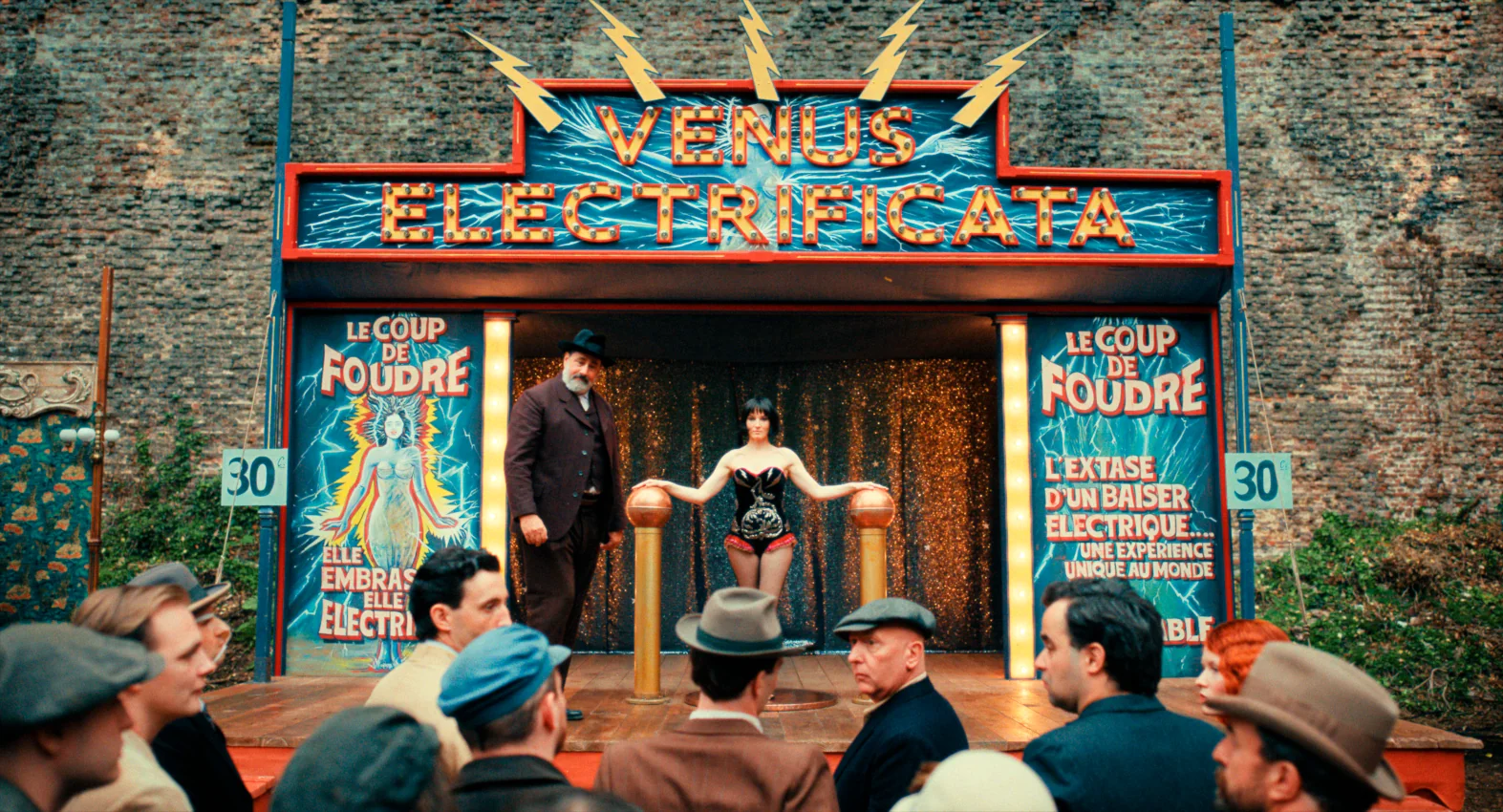
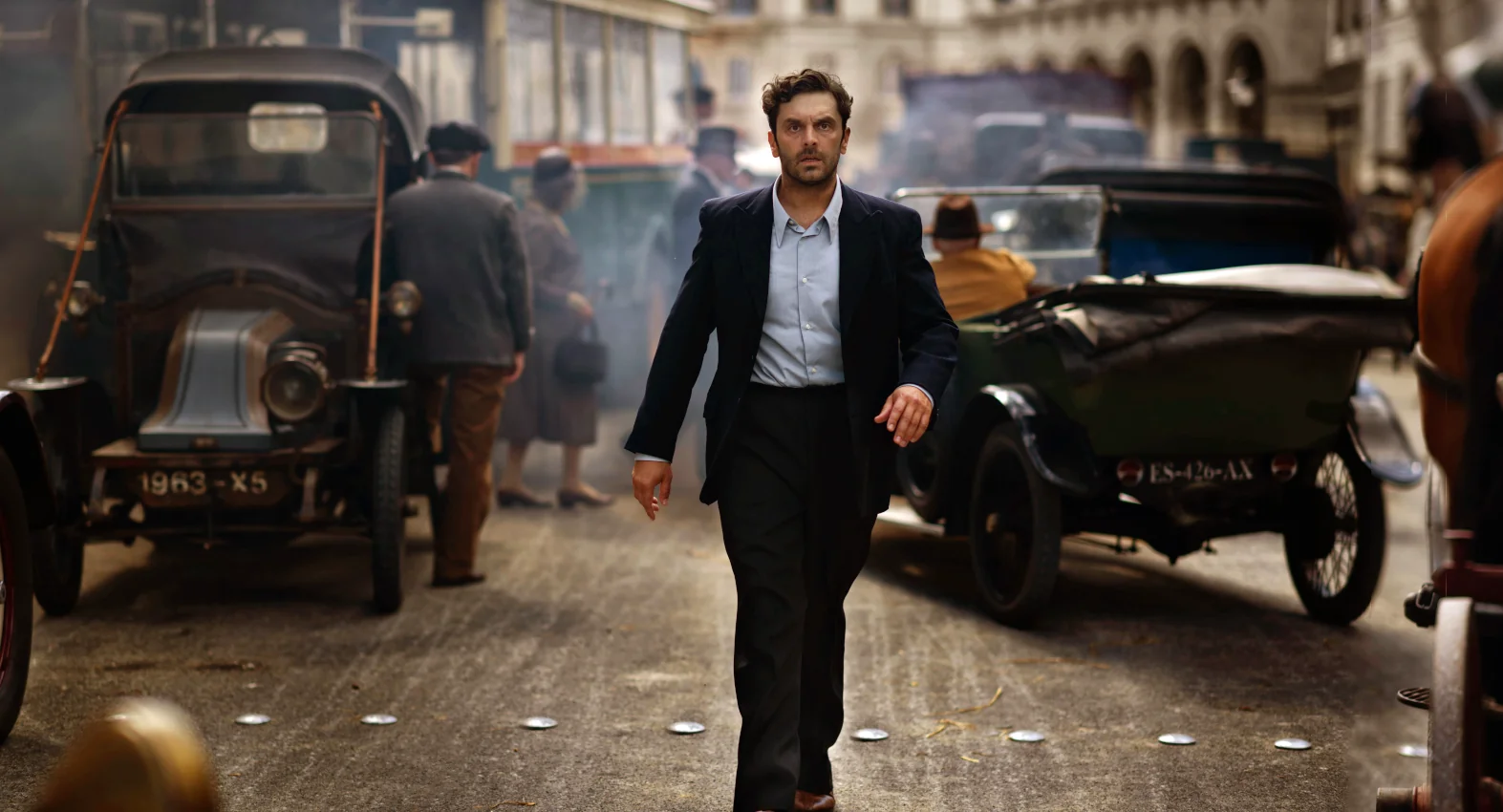
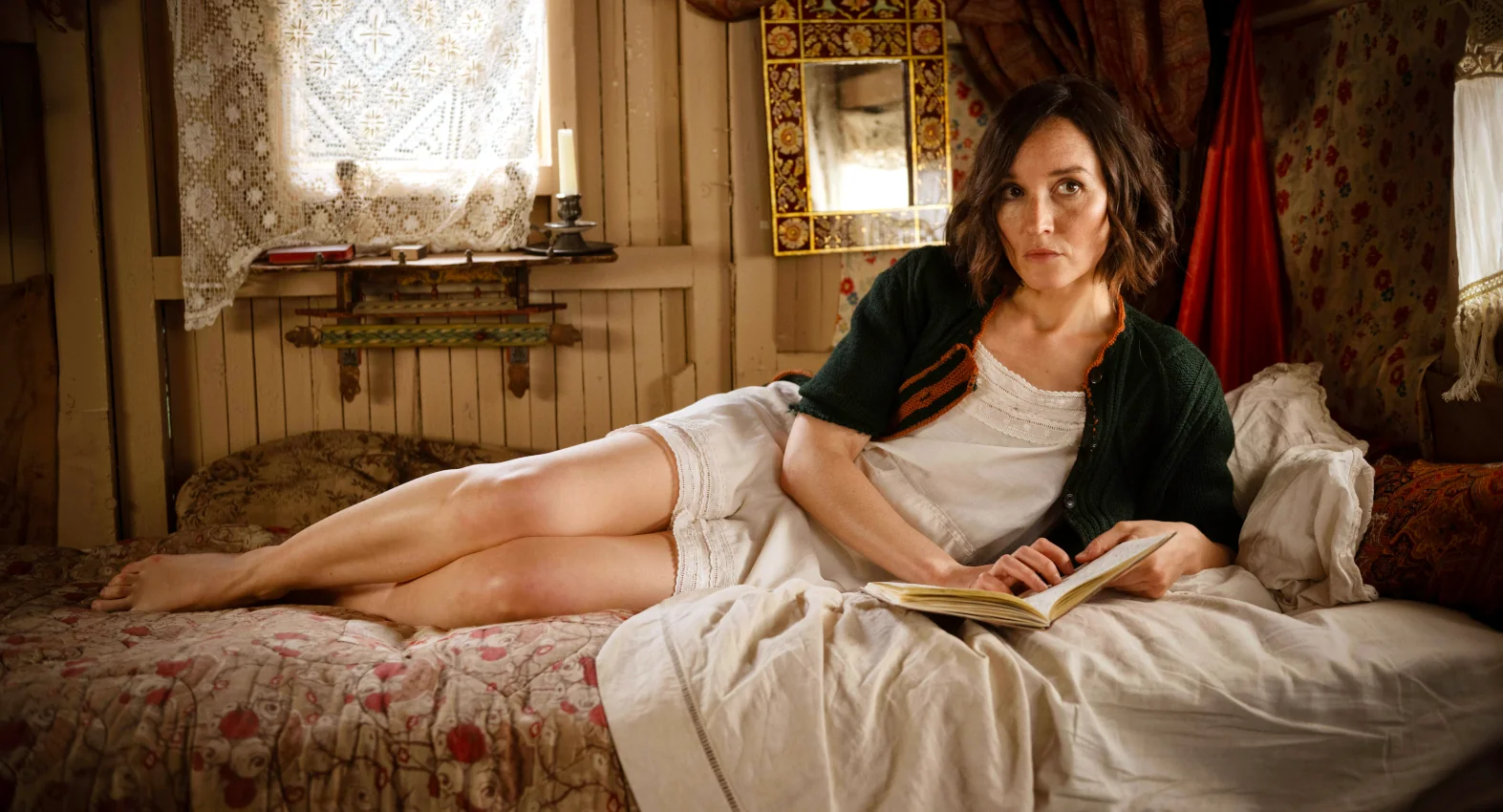
Paris, 1928. Antoine Balestro, a sought-after painter, has been unable to work since his wife’s death and is driving his gallery owner, Armand, to despair. One evening, a drunken Antoine tries to contact his wife through a clairvoyant. Unbeknownst to him, however, he is in fact speaking to Suzanne, a humble fairground worker who has sneaked into the clairvoyant’s caravan to steal food. Suzanne proves to be a gifted con artist and, with Armand’s help, soon stages one fake séance after another. Gradually, Antoine regains his inspiration, but for Suzanne the situation becomes complicated as she slowly falls in love with the very man she is manipulating …
„In Pierre Salvadori’s work, fiction is repeatedly reflected through a multitude of lies, staged encounters and masks. All these strange stories, these incredible tales, bear witness from the very outset to the same conviction, one that is firmly rooted in their melancholy: the belief in the illusion (of love) is well worth reality, at least for a certain time; it is a gift to the other – to the friend, to the viewer. La Vénus électrique is not merely a fictional narrative squared; with this film, the director aims for extravagance, pulls out all the stops and brings out the costume trunk to defend the colours of the show loud and clear. (…)
The first glimpse of Montmartre as it once was and the homage to the world of painting are reminiscent of Cédric Klapisch’s La Venue de l’avenir. Between La Venue and La Vénus, however, a charm all of its own has crept in, which is due above all to the fact that the actors are less constrained by their roles and are often filmed very close to their emotional states: Gilles Lellouche, who plays Armand – Antoine’s friend and gallery owner – oscillates between the Gallic roughness à la Obélix that remains in the back of his eyes and the disarming sadness hidden behind it. This space, which allows for inner turmoil, is also thanks to the skillful dialogue. In the middle of a telling-off, quite casually, Armand whispers to Suzanne: ‘You do me good.’ The masquerade crumbles whenever emotions come to the surface – that is Salvadori’s great art.
Mathilde Grasset | Cahier du Cinéma

Credits:Original title: La Vénus électrique
France 2026, 122 mins, French with German subtitles
Director: Pierre Salvadori
Screenplay: Benjamin Charbit, Benoît Graffin, Pierre Salvadori
Based on an original idea by Rebecca Zlotowski and Robin Campillo
Cinematography: Julien Poupard
Editing: Anne-Sophie Bion
Starring: Pio Marmaï, Anaïs Demoustier, Gilles Lellouche, Vimala Pons
Trailer:
nach oben