The Opal Coast, northern France. In a quiet and picturesque fishing village, something finally happens: a special baby is born. A child so unique and peculiar that it unleashes a secret war between extraterrestrial forces of good and evil.
Basel Adra, a young Palestinian activist from Masafer Yatta on the West Bank, has been fighting the mass expulsion of his community by Israel’s occupation since childhood. He documents the slow-motion eradication of the villages in his home region where soldiers deployed by the Israeli government are gradually demolishing houses and driving out their residents. At some point, he meets Yuval, an Israeli journalist, who supports him in his efforts. An unlikely alliance develops. But the relationship between the two is strained by the enormous inequality between them: Basel lives under military occupation while Yuval lives freely and without restrictions. This film by a Palestinian-Israeli collective of four young activists has been made as an act of creative resistance on the path to greater justice.
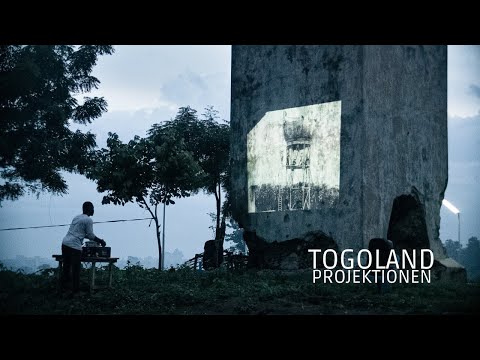
Following in the footsteps of the Hamburg film director Hans Schomburgk who travelled through the German colony of Togo from Lomé to the north with his companion and actress Meg Gehrts in 1913, Jürgen Ellinghaus screens the footage shot then at its locations in modern-day Togo. Schomburgk’s affirmative images show slave labour, humiliation and the arrogance of the colonial power. The material is contrasted by Gehrts’ romanticising diary entries and other colonial reports which often testify to a horrifying coldness.
The screenings of this material, which has never been shown in Togo before, prompt the audiences to reflect on tradition, stereotypes, the “white gaze.” In the villages, the colonial images conjure up memories of handed down stories. In the metropolis of Lomé, young film enthusiasts deplore that these images were kept from them until today and discuss in which contexts they should be screened. But “Togoland Projections” not only shows how much these painful documents and texts are needed in contemporary Togo, because they are part of the country’s history. The film also demonstrates that they are needed in Germany so we can take responsibility for our suppressed history and face our own racism – past and present. Christoph Terhechte
Credits:
DE 2023, 96 Min., div. OmU Regie: Jürgen Ellinghaus Kamera: Rémi Jennequin Schnitt: Nina Khada
In the heart of the Nepalese Himalayas, the spirited Pema embraces a polyandrous marriage with Tashi and his two younger brothers. They initially lead a harmonious life, but when Tashi fails to return from a trading trip to Lhasa, the legitimacy of Pema’s unborn child is questioned by her community. Determined to prove her love and purity, she embarks on a quest to find Tashi. Accompanied by her brother-in-law, her now de facto spouse Karma, she goes into the wilderness. Karma is a monk. After initially resisting giving up his monastic life, he gradually comes to appreciate the simple existence of a secular life. However, urgent duties call him back to the monastery and Pema is left alone. As she navigates the harsh Himalayan terrain, her quest transcends the search for her missing husband. Pema becomes increasingly immersed in a spiritual search for meaning in which every step brings her closer to self-discovery and liberation.
Credits:
NP/FR/NO/HK/CN/TK/TW/US/QA 2024, 150 Min., Tibetisch, Nepali Originalfassung mit deutschen und englischen Untertiteln Regie: Min Bahadur Bham Kamera: Aziz Zhambakiyev Schnitt: Liao Ching Sung, Kiran Shrestha mit: Thinley Lhamo, Sonam Topden, Tenzin Dalha, Karma Wangyal Gurung, Karma Shakya, Loten Namling, Tsering Lhamo Gurung, Janga Bahadur Lama
The Opal Coast, northern France. In a quiet and picturesque fishing village, something finally happens: a special baby is born. A child so unique and peculiar that it unleashes a secret war between extraterrestrial forces of good and evil.
Basel Adra, a young Palestinian activist from Masafer Yatta on the West Bank, has been fighting the mass expulsion of his community by Israel’s occupation since childhood. He documents the slow-motion eradication of the villages in his home region where soldiers deployed by the Israeli government are gradually demolishing houses and driving out their residents. At some point, he meets Yuval, an Israeli journalist, who supports him in his efforts. An unlikely alliance develops. But the relationship between the two is strained by the enormous inequality between them: Basel lives under military occupation while Yuval lives freely and without restrictions. This film by a Palestinian-Israeli collective of four young activists has been made as an act of creative resistance on the path to greater justice.
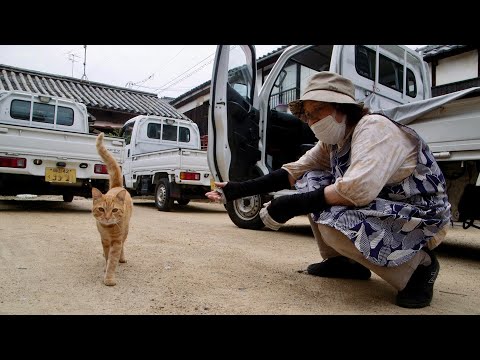
Steep steps lead up to the Gokogu Shinto shrine in Ushimado. The local children play on them and the older residents attend to their upkeep, even planting mint on either side. Kazuhiro Soda presents these steps as a site of transition that also forms a key element of this tiny set-up. For this elevated shrine isn’t just somewhere to visit for spiritual purposes – Ushimado’s feline community has also set up home here, an occasionally dynamic collective consisting of cats abandoned by their owners and their subsequent offspring. They need to be cared for, even as their population must be kept in check. Kazuhiro Soda’s documentaries – many of them which have already screened at the Forum – always follow his own set of rules and show the seemingly innocuous, yet still weighty requirements of co-existence. Slowly, yet persistently, The Cats of Gokogu Shrine expands his gaze; the focus on details, everyday tendernesses and discipline gives this chronicle of a year a dimension that is at once down-to-earth and universal. And the presence of Kazuhiro Soda himself, who has lived in Ushimado for several years, can also be experienced first-hand in a restrained, honest manner.
Credits:
Gokogu no Neko JP 2024, 119 Min., japanische OmU Regie, Kamera, Schnitt: Kazuhiro Soda
In the heart of the Nepalese Himalayas, the spirited Pema embraces a polyandrous marriage with Tashi and his two younger brothers. They initially lead a harmonious life, but when Tashi fails to return from a trading trip to Lhasa, the legitimacy of Pema’s unborn child is questioned by her community. Determined to prove her love and purity, she embarks on a quest to find Tashi. Accompanied by her brother-in-law, her now de facto spouse Karma, she goes into the wilderness. Karma is a monk. After initially resisting giving up his monastic life, he gradually comes to appreciate the simple existence of a secular life. However, urgent duties call him back to the monastery and Pema is left alone. As she navigates the harsh Himalayan terrain, her quest transcends the search for her missing husband. Pema becomes increasingly immersed in a spiritual search for meaning in which every step brings her closer to self-discovery and liberation.
Credits:
NP/FR/NO/HK/CN/TK/TW/US/QA 2024, 150 Min., Tibetisch, Nepali Originalfassung mit deutschen und englischen Untertiteln Regie: Min Bahadur Bham Kamera: Aziz Zhambakiyev Schnitt: Liao Ching Sung, Kiran Shrestha mit: Thinley Lhamo, Sonam Topden, Tenzin Dalha, Karma Wangyal Gurung, Karma Shakya, Loten Namling, Tsering Lhamo Gurung, Janga Bahadur Lama
After an absence of more than ten years, Rona returns to her home on the remote Orkney Islands in Scotland. As she rediscovers the unique, wild landscape in which she grew up, her childhood memories mingle with those from her more recent times as an addict. Her departure for the city and subsequent dissolute years in London resulted in a painful fall. But little by little, her encounter with the enchanted, wind-battered coasts of the islands becomes a chance for a new life. Nora Fingscheidt’s adaptation of Amy Liptot’s autobiographical bestseller uses harrowing flashbacks to depict Rona’s downward spiral in London and her time in a strict rehab programme. However, the focus of the film is on her liberation from personal demons through a connection with the nature of her childhood home.
Credits:
GB/DE 2024, 117 Min., engl. OmU Regie: Nora Fingscheidt Kamera: Yunus Roy Imer Schnitt: Stephan Bechinger mit Saoirse Ronan, Paapa Essiedu, Stephen Dillane, Saskia Reeves, Nabil Elouahabi, Izuka Hoyle, Lauren Lyle
Basel Adra, a young Palestinian activist from Masafer Yatta on the West Bank, has been fighting the mass expulsion of his community by Israel’s occupation since childhood. He documents the slow-motion eradication of the villages in his home region where soldiers deployed by the Israeli government are gradually demolishing houses and driving out their residents. At some point, he meets Yuval, an Israeli journalist, who supports him in his efforts. An unlikely alliance develops. But the relationship between the two is strained by the enormous inequality between them: Basel lives under military occupation while Yuval lives freely and without restrictions. This film by a Palestinian-Israeli collective of four young activists has been made as an act of creative resistance on the path to greater justice.
Wir verwenden Cookies, um unsere Website und unseren Service zu optimieren.
Funktionale Cookies
Always active
Die technische Speicherung oder der Zugang ist unbedingt erforderlich für den rechtmäßigen Zweck, die Nutzung eines bestimmten Dienstes zu ermöglichen, der vom Teilnehmer oder Nutzer ausdrücklich gewünscht wird, oder für den alleinigen Zweck, die Übertragung einer Nachricht über ein elektronisches Kommunikationsnetz durchzuführen.
Vorlieben
Die technische Speicherung oder der Zugriff ist für den rechtmäßigen Zweck der Speicherung von Präferenzen erforderlich, die nicht vom Abonnenten oder Benutzer angefordert wurden.
Statistiken
Die technische Speicherung oder der Zugriff, der ausschließlich zu statistischen Zwecken erfolgt.Die technische Speicherung oder der Zugriff, der ausschließlich zu anonymen statistischen Zwecken verwendet wird. Ohne eine Vorladung, die freiwillige Zustimmung deines Internetdienstanbieters oder zusätzliche Aufzeichnungen von Dritten können die zu diesem Zweck gespeicherten oder abgerufenen Informationen allein in der Regel nicht dazu verwendet werden, dich zu identifizieren.
Marketing
Die technische Speicherung oder der Zugriff ist erforderlich, um Nutzerprofile zu erstellen, um Werbung zu versenden oder um den Nutzer auf einer Website oder über mehrere Websites hinweg zu ähnlichen Marketingzwecken zu verfolgen.