Once married to each other, Lucas and Edith have been estranged for ten years, ever since Lucas left. At Edith’s request, they meet at the cemetery where their only child is buried. During a long wait, their conversation progresses, revisiting their shared past and raising new prospects for their future. .
Light is a fascinating phenomenon. Without light, there would be no cinema, no film – and no life. So light is at the origin of everything, and yet it remains invisible to the eye until it hits matter. This moment is – quite literally – the starting point of Thomas Riedelsheimer’s latest work, for the springtime spectacle of rainbow shreds in the cinematographer and documentary filmmaker’s flat became the starting point of a search for the origin of the images we form of this world. For this quest he dived deep into two spheres that seem to follow different laws but always strive to fathom the magical: physics and art. An intellectual and poetic ping pong game evolves between researchers from the Max Planck Institute in Erlangen and the “Extreme Light Group” of the University of Glasgow as well as internationally renowned artists such as Ruth Jarman, Joe Gerhardt, Julie Brook, Johannes Brunner and Raimund Ritz. In its course, the various perspectives on light lead to new insights on all sides that would hardly have been achieved without this methodical cross-over: about laser power and colour pigments, about black holes and floating sculptures. In brief moments, the uninitiated may even get some idea of the laws of quantum physics, generally considered impossible to visualise.
Luc-Carolin Ziemann
Credits:
DE/GB 2024, 99 Min., engl./dt. Originalfassung mit deutschen und englischen Untertiteln Regie, Kamera, Schnitt: Thomas Riedelsheimer Musik: Fred Frith, gabby fluke-mogul
A Real Pain follows mismatched cousins David and Benji who reunite for a tour through Poland to honor their beloved grandmother. The adventure takes a turn when the odd couple’s old tensions resurface against the backdrop of their family history.
Credits:
US/PL 2024, 90 Min., engl. OmU Regie: Jesse Eisenberg Kamera: Michael Dymak Schnitt: Robert Nassau mit Jesse Eisenberg, Kieran Culkin, Will Sharpe, Jennifer Grey, Kurt Egyiawan, Liza Sadovy, Daniel Oreskes
Trailer:
A REALPAIN | Official Teaser | Searchlight Pictures
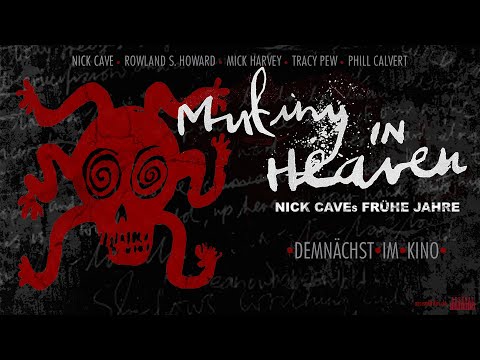
Formed in Melbourne, Australia in the late 1970s The Birthday Party were one of the most influential acts of their time. From humble beginnings in suburban Melbourne they grew to command a level of respect around the world which remains undiminished to this day. Fuelled by the incendiary relationship between vocalist Nick Cave and guitarist Rowland S. Howard, The Birthday Party were frequently described as the most dangerous band in the world.
Nick Cave – Vocals
Phill Calvert – Drums
Mick Harvey – Guitar, Drums
Rowland S. Howard – Guitar
Tracy Pew – Bass
Having emerged from the ashes of Cave and Harvey’s first punk-pop band, The Boys Next Door and morphed into The Birthday Party, they quickly rose to become one of the most lauded post-punk bands in the country. Motivated, ambitious and riding high on their success, the group decided to relocate to London – where a totally different reality awaited them. Scorned by the British music press and unable to obtain more than a handful of gigs, the band’s fortunes collapsed as they froze and starved in a series of ever more squalid bedsits and squats.
Nick Cave and the Birthday Party in a pub in Kilburn, London, UK on 22 October 1981. (Photo by David Corio/Redferns)
Credits:
AU 2023, 99 Min, engl. OmU Regie: Ian White Kamera: Craig Johnston Schnitt: Aaron J. March mit: Phil Calvert, Nick Cave, Mick Harvey, Rowland S. Howard, Tracy Pew
Light is a fascinating phenomenon. Without light, there would be no cinema, no film – and no life. So light is at the origin of everything, and yet it remains invisible to the eye until it hits matter. This moment is – quite literally – the starting point of Thomas Riedelsheimer’s latest work, for the springtime spectacle of rainbow shreds in the cinematographer and documentary filmmaker’s flat became the starting point of a search for the origin of the images we form of this world. For this quest he dived deep into two spheres that seem to follow different laws but always strive to fathom the magical: physics and art. An intellectual and poetic ping pong game evolves between researchers from the Max Planck Institute in Erlangen and the “Extreme Light Group” of the University of Glasgow as well as internationally renowned artists such as Ruth Jarman, Joe Gerhardt, Julie Brook, Johannes Brunner and Raimund Ritz. In its course, the various perspectives on light lead to new insights on all sides that would hardly have been achieved without this methodical cross-over: about laser power and colour pigments, about black holes and floating sculptures. In brief moments, the uninitiated may even get some idea of the laws of quantum physics, generally considered impossible to visualise.
Luc-Carolin Ziemann
Credits:
DE/GB 2024, 99 Min., engl./dt. Originalfassung mit deutschen und englischen Untertiteln Regie, Kamera, Schnitt: Thomas Riedelsheimer Musik: Fred Frith, gabby fluke-mogul
Der Eröffnungsfilm des letzten Afrikamera-Filmfestivals hat viele überraschende Aspekte, ohne Wundertüte zu sein. Trotz Bürgerkrieg und prekärem Leben im Postkolonialismus geht es ruhig zu, die Sprache ist einfach und der Ton lakonisch. Die drei Mitglieder einer unfreiwilligen Patchworkfamilie im Dorf Paradise in Somalia haben ihre eigenen Sorgen. Mamargades Job als traditioneller Leichenbestatter wird bald von Maschinen übernommen, seine Schwester Araweelo lebt in Scheidung und muss sich neu orientieren, und Ziehsohn Cigaal wird wegen Lehrermangels aufs Internat geschickt, was er nicht will, und wofür auch eigentlich kein Geld da ist. Der somalisch-österreichische Drehbuchautor und Regisseur Mo Harawe liefert mit seinem Debütfilm einen seltenen Einblick in ein Land, das kaum je auf der großen Leinwand zu sehen ist. „Doch trotz der zahlreichen persönlichen Rückschläge, die Harawe fast nebenbei in einen größeren, politischen Kontext einbettet, ist The Village Next to Paradise keine Leidenspassion. Bild und Ton streben dem entgegen: Die Primärfarben leuchten vor dem sandigen Hintergrund, Musik wird in Form von Liedern aus der Region sehr gezielt eingesetzt. … Weltkino im besten Sinn. Harawe gibt Einblicke in das Leben in einer Gegend, das so bislang kaum zu sehen war. Das gelingt ihm ohne Ausstellen von Fremdheit, Elend oder Sentimentalität. Fast sind seine Charaktere zu resilient für das Leben in einer Wirklichkeit, in der eine Frau Worte sagen kann wie: ‚Es hat keinen Sinn, Kinder zu bekommen. Sie haben keine Zukunft und sterben jung.‘“ Valerie Dirk, Der Standard
THE VILLAGENEXTTOPARADISE ist der erste somalische Film, der jemals in der prestigeträchtigen Sektion „Un Certain Regard“ in Cannes gezeigt wurde.
Credits:
DE/FR/AU/SO 2024, 133 Min., Somali OmU Regie: Mo Harawe Kamera: Mostafa El Kashef Schnitt: Joana Scrinzi, aea mit Ahmed Ali Farah, Anab Ahmed Ibrahim, Ahmed Mohamud Saleban
A target of Iran’s hardline conservative government for his films’ criticism of the state, director Mohammad Rasoulof fled his home country to avoid an eight-year prison sentence, though he hadn’t finished editing his latest film yet. His searing drama The Seed of the Sacred Fig won a Special Prize from the jury and three other awards on its premiere at the Cannes Film Festival. The film is every bit as urgent and gripping as its real-life backstory would portend: longtime government worker Iman (Missagh Zareh) has just received a major promotion to the role of judge’s investigator, to the hopeful delight of his wife Najmeh (Soheila Golestani); at the same moment, a series of student protests against the government have exploded in the streets, stoking the sympathies of their independent-minded daughters Rezvan (Mahsa Rostami) and Sana (Setareh Maleki). The growing wedge between progressive children and traditional parents intensifies through a series of unsettling events that put Iman’s future in jeopardy. Both paranoia thriller and domestic drama, The Seed of the Sacred Fig is above all an epic of anti-patriarchal political conviction.
Credits:
IR, DE, FR 2024, 168 Min., farsi OmU Regie: Mohammad Rasoulof Kamera: Pooyan Aghababaei Schnitt: Andrew Bird mit Missagh Zareh, Soheila Golestani, Mahsa Rostami, Setareh Maleki, Niousha Akhshi
In 1980, two biographies cross paths in a Paris cinema: those of young cinema-goer Alexander Horwath and the actor Henry Fonda. Horwath recognised early on that the popular view of Fonda as a “typical American” and the “conscience of the USA” in his acting roles doesn’t paint the full picture. It is the more convoluted paths of Fonda’s biography and how he played roles and embodied attitudes extending beyond individual characters that truly interest Horwath. Thrillingly edited with Michael Palm, his essay film follows them across the history of film into an imaginary republic of places, times, characters: “The United States of Fonda”. Fonda becomes the link between an old and a new America, the thoughtful face of the alleged transition from the law of the jungle to civilisation as well as a critic of an American self-image that only serves itself. Paradoxically, it’s the magic of cinema invoked in the film that contributes to this (self-)disenchantment of America via its own specific techniques and the help of one of its greatest magicians. And in doing so creates a wonderfully complex cinematic memorial to both the USA and storyteller and actor Fonda – the president that never was.
Credits:
AT/DE 2024, 184 Min., engl./dt. Originalfassung mit deutschen und englischen Untertiteln Regie: Alexander Horwath Kamera & Schnitt: Michael Palm
Trailer:
Henry Fonda for President (2024) | Trailer | Regie: Alexander Horwath
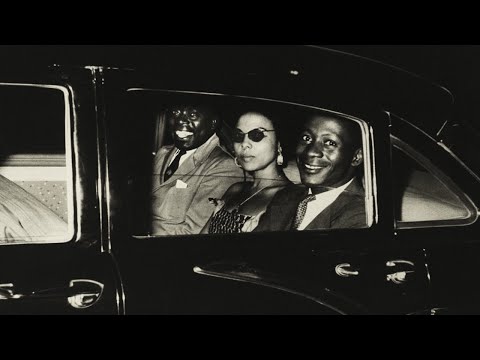
Artist Johan Grimonprez’s new film essay stems from detailed research about some of the machinations the Western colonial powers, such as his native Belgium or the US, came up with to undermine the African decolonization movement. It specifically reexamines the Democratic Republic of the Congo (then Zaire) and its struggle for independence in the context of the CIA’s history of arts patronage, telling how the US Foreign Intelligence agency sent Louis Armstrong as a jazz ambassador to distract from their involvement in the assassination of newly elected Prime Minister Patrice Lumumba. Nina Simone was sent on a similar tour of Nigeria by a CIA front organization, yet other jazz greats got involved less unwittingly. Dizzy Gillespie briefly ran for president in 1964 and promised that the White House would be renamed the Blues House, while Abbey Lincoln and Max Roach crashed the UN Security Council to protest Lumumba’s assassination. Both a historical pamphlet and a swinging musical composition, SOUNDTRACKTO A COUP D’ETAT unfolds like a record’s extensive sleeve notes, as the jazz sounds propel and carry along facts, figures and footnotes of major and minor histories with them at dizzying speed. (Antoine Thirion)
Credits:
BE/FR/NL 2024, 150 Min., engl., frz. OmU,
Regie: Johan Grimonprez,
mit: Patrice Lumumba, Louis Armstrong, Andrée Blouin, Nina Simone, Nikita Krutschev, Eisenhower, Fidel Castro, Duke Elligton
Once married to each other, Lucas and Edith have been estranged for ten years, ever since Lucas left. At Edith’s request, they meet at the cemetery where their only child is buried. During a long wait, their conversation progresses, revisiting their shared past and raising new prospects for their future. .
Wir verwenden Cookies, um unsere Website und unseren Service zu optimieren.
Funktionale Cookies
Always active
Die technische Speicherung oder der Zugang ist unbedingt erforderlich für den rechtmäßigen Zweck, die Nutzung eines bestimmten Dienstes zu ermöglichen, der vom Teilnehmer oder Nutzer ausdrücklich gewünscht wird, oder für den alleinigen Zweck, die Übertragung einer Nachricht über ein elektronisches Kommunikationsnetz durchzuführen.
Vorlieben
Die technische Speicherung oder der Zugriff ist für den rechtmäßigen Zweck der Speicherung von Präferenzen erforderlich, die nicht vom Abonnenten oder Benutzer angefordert wurden.
Statistiken
Die technische Speicherung oder der Zugriff, der ausschließlich zu statistischen Zwecken erfolgt.Die technische Speicherung oder der Zugriff, der ausschließlich zu anonymen statistischen Zwecken verwendet wird. Ohne eine Vorladung, die freiwillige Zustimmung deines Internetdienstanbieters oder zusätzliche Aufzeichnungen von Dritten können die zu diesem Zweck gespeicherten oder abgerufenen Informationen allein in der Regel nicht dazu verwendet werden, dich zu identifizieren.
Marketing
Die technische Speicherung oder der Zugriff ist erforderlich, um Nutzerprofile zu erstellen, um Werbung zu versenden oder um den Nutzer auf einer Website oder über mehrere Websites hinweg zu ähnlichen Marketingzwecken zu verfolgen.