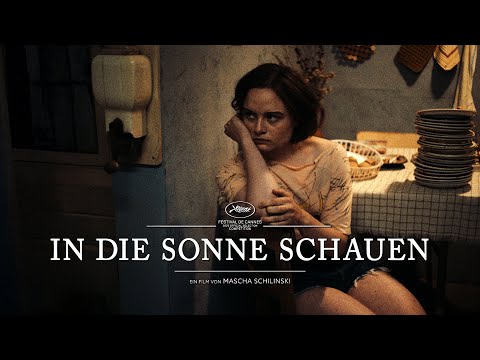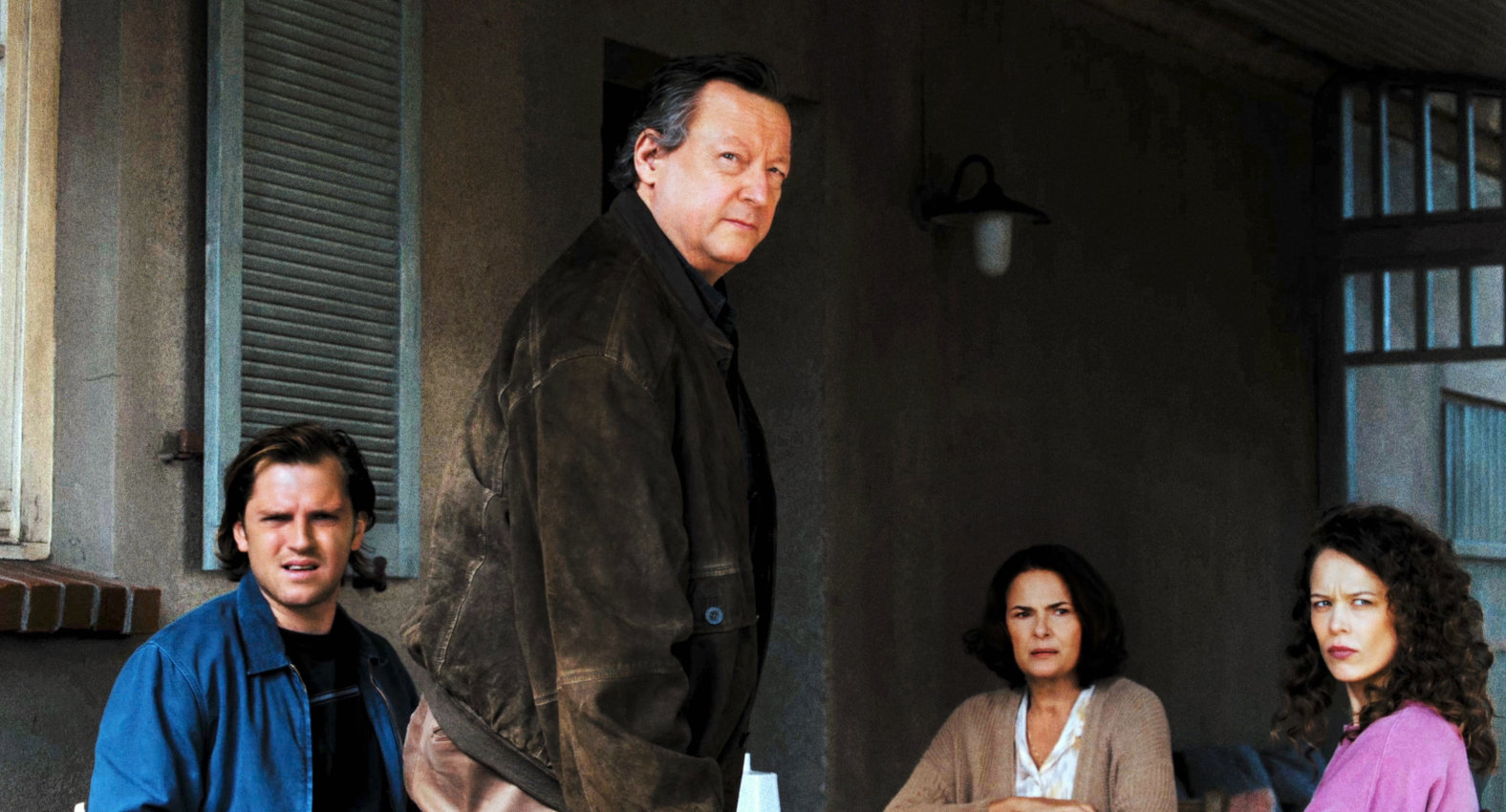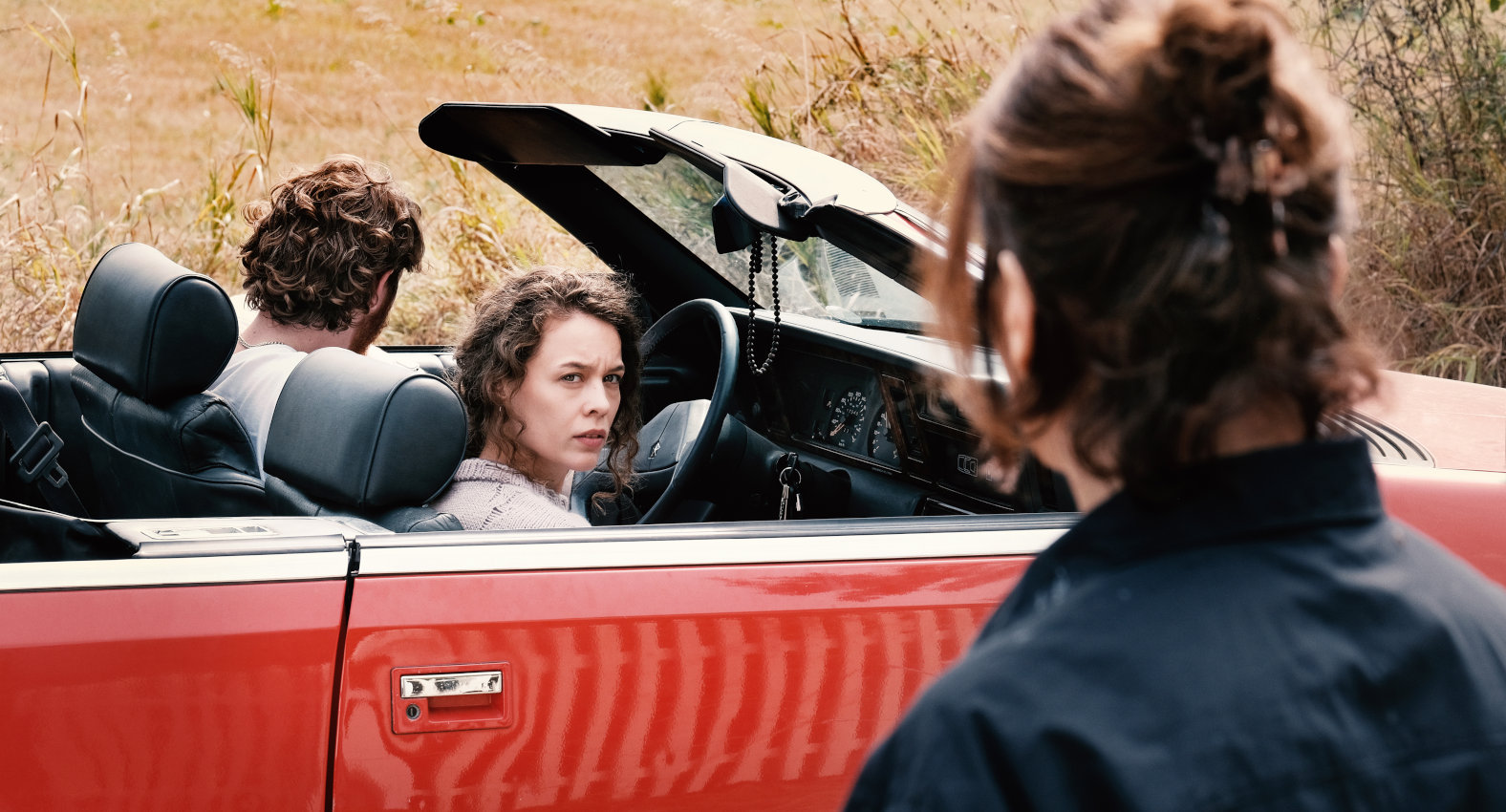
Four girls, Alma, Erika, Angelika, and Lenka, each spend their youth on the same farm in northern Germany. As the home evolves over a century, echoes of the past linger in its walls. Though separated by time, their lives begin to mirror each other.
Cannes 2025 – Jury Prize
Credits:
DE 2024, 149 Min., Regie: Mascha Schilinski Kamera: Fabian Gamper Schnitt: Evelyn Rack Darsteller*innen: Luise Heyer, Lena Urzendowsky, Claudia Geisler-Bading, Lea Drinda, Hanna Heckt
Trailer:
Kinotrailer „In die Sonne schauen” – Kinostart 28. August 2025
Four girls, Alma, Erika, Angelika, and Lenka, each spend their youth on the same farm in northern Germany. As the home evolves over a century, echoes of the past linger in its walls. Though separated by time, their lives begin to mirror each other.
Cannes 2025 – Jury Prize
Credits:
DE 2024, 149 Min., Regie: Mascha Schilinski Kamera: Fabian Gamper Schnitt: Evelyn Rack Darsteller*innen: Luise Heyer, Lena Urzendowsky, Claudia Geisler-Bading, Lea Drinda, Hanna Heckt
Trailer:
Kinotrailer „In die Sonne schauen” – Kinostart 28. August 2025
Four girls, Alma, Erika, Angelika, and Lenka, each spend their youth on the same farm in northern Germany. As the home evolves over a century, echoes of the past linger in its walls. Though separated by time, their lives begin to mirror each other.
Cannes 2025 – Jury Prize
Credits:
DE 2024, 149 Min., Regie: Mascha Schilinski Kamera: Fabian Gamper Schnitt: Evelyn Rack Darsteller*innen: Luise Heyer, Lena Urzendowsky, Claudia Geisler-Bading, Lea Drinda, Hanna Heckt
Trailer:
Kinotrailer „In die Sonne schauen” – Kinostart 28. August 2025
A father (Sergi López) and his son arrive at a rave deep in the mountains of southern Morocco. They’re searching for Mar — daughter and sister — who vanished months ago at one of these endless, sleepless parties. Surrounded by electronic music and a raw, unfamiliar sense of freedom, they hand out her photo again and again. Hope is fading but they push through and follow a group of ravers heading to one last party in the desert. As they venture deeper into the burning wilderness, the journey forces them to confront their own limits.
Credits:
ES/FR 2025, 120 Min., span., frz. . OmU Regie: Oliver Laxe Kamera: Mauro Herce Schnitt: Cristóbal Fernández Musik: Kangding Ray mit: Sergi López, Bruno Núñez, Stefania Gadda, Joshua Liam Henderson
Trailer:
Sirāt | Trailer | Oliver Laxe | Sergi López | Bruno Nuñez
DK/PL/SVE 2024 R: Magnus von Horn 115 min, OmdU B: Magnus von Horn & Line Langebek K: Michał Dymek S: Agnieszka Glińska M: Frederikke Hoffmeier D: Vic Carmen Sonne, Trine Dyrholm, Besir Zeciri, Joachim Fjelstrup, Tessa Hoder, Ava Knox Martin, Monika Kępka, Magnus von Horn u. a.
Europa wird vom Ersten Weltkrieg zerrüttet und Karoline schlägt sich mehr schlecht als recht durch das harte Leben einer Näherin in einer Kopenhagener Textilfabrik. Zum Glück hat der Fabrikbesitzer ein Auge auf sie geworfen, sie wird sogar von ihm schwanger – aber seine Mutter sperrt sich gegen die Beziehung und Karoline muss zurück in ihre kalte, baufällige Absteige. Dorthin kommt unvermittelt ihr totgeglaubter Mann schwer entstellt von der Front zurück. Verzweifelt versucht Karoline, mit einer Nadel das ungewollte Kind in ihrem Bauch loszuwerden. Eine fremde Frau verhindert das in letzter Sekunde und lädt sie ein, nach der Geburt zu ihr zu kommen. Sie will bei der Suche nach wohlhabenden Adoptiveltern helfen. Aber irgendetwas ist an ihr verdächtig. Ist sie eine barmherzige Helferin oder eine skrupellose Geschäftsfrau? In virtuosen, reduzierten Schwarz-Weiß-Bildern von Michał Dymek, untermalt von elektronischen Klängen Frederikke Hoffmeiers, erzählt Magnus von Horn vordergründig ruhig, jedoch in starker Verdichtung eine Geschichte, die als Sozialstudie beginnt und sich zur Tragödie ausweitet, deren Relevanz bis in die Gegenwart reicht. Dabei brillieren die Hauptdarstellerinnen Vic Carmen Sonne und Trine Dyrholm, Für die Szenografie wurden u. a. Kłodzko, Łódź, Zgierz und Wrocław in Szene gesetzt. [Rainer Mende]
The film tells the story of the 2020 racist attack in the city of Hanau in the German state of Hesse from the perspective of the bereaved relatives and the survivors. Within the space of just a few minutes, the perpetrator shot nine young people dead because he did not consider them to be German. What are the direct and long-term consequences of such an attack on people and their city? Director Marcin Wierzchowski accompanied the protagonists for four years as they faced their grief and strived to come to terms with the loss of a loved one. But the film also reveals their struggle for recognition and a sense of belonging in the country they call home. The relatives feel abandoned by the authorities and politicians alike because, despite many words of sympathy, they themselves are left to uncover the circumstances of the crime. In the process, they encounter the cold bureaucracy of a system that is woefully unprepared for such an attack – even though right-wing terror is a tragically commonplace part of German history.
Credits:
DE 2025, 132 Min., Deutsch, Rumänisch, Türkisch, Englisch OmU Regie: Marcin Wierzchowski Schnitt: Stefan Oliveira-Pita Kamera: Marcin Wierzchowski, Peter Peiker
Michelle, a model grandmother, is enjoying peaceful retirement in a Burgundy village, close to her best friend Marie-Claude. On All Saints‘ Day, her daughter Valérie arrives to drop off her grandson Lucas for the school holiday week. But nothing will go to plan.
A middle-class Palestinian family in Haifa sees life spiral out of control under the oppressive reality of contemporary Israeli society.
The daughter, Fifi, is studying in Jerusalem and gets into a car accident; the son, Toufic, is involved in secret romantic liaisons and must contend with an unwanted pregnancy; and the father is embroiled in what could amount to insurance fraud.
Oscar nominee Scandar Copti (Ajami, 2009) presents a gripping family drama as his second feature film. Led by an ensemble of non-professional actors, it interweaves the stories of multiple characters whose fates are undeniably – and resentfully – interlinked. The characters in this masterfully written screenplay, grounded in intimate portrayals of moral relativism, walk a fine line between conceding to and resisting the status quo of Israeli state violence. The film premiered at the Venice Film Festival in 2024 and won the Horizons Award for Best Screenplay.
PL/D 2024 R: Kamila Tarabura 101 min, OmdU B: Kamila Tarabura & Katarzyna Warnke K: Tomasz Naumiuk S: Alan Zejer M: CEL D: Dagmara Domińczyk, Katarzyna Warnke, Małgorzata Hajewska-Krzysztofik, Andrzej Konopka u. a.
Eigentlich will sich die hochschwangere Kriegsjournalistin Ada eine Auszeit bei ihrem Partner in Hamburg gönnen. Doch dann bekommt sie aus Polen ein Buch zugeschickt, in dem eine Frau ihre Missbrauchserfahrungen als Kind schildert – versehen mit einer persönlichen Widmung und einer Telefonnummer. Gegen jede Vernunft macht sich Ada auf den Weg in ihre alte Heimat. Dort trifft sie sich mit Roksana, der Autorin des Buchs. Diese bittet Ada, mit ihr in die polnische Provinz zu fahren, wo beide aufgewachsen sind. Vielleicht können sie nach dem Tod von Roksanas Vater ihre Mutter dazu bringen, das Schweigen über die Ereignisse von damals zu brechen. Das odd couple macht sich auf den Weg, um zu rekonstruieren, was geschehen ist – oder ob sich Roksana die Geschichte vielleicht nur ausgedacht hat. Kamila Taraburas Langfilm-Debüt ist eine feinfühlige Mischung aus Roadmovie, Thriller, Krimi und Psychoporträt, das viele überraschende Wendungen nimmt, um parallel mehrere Geschichten zu erzählen. Dabei kann sich die Regisseurin vor allem auf ihre traumhaft interagierenden Hauptdarstellerinnen Dagmara Domińczyk (Ada) und Katarzyna Warnke (Roksana) verlassen, deren Schweigen oft beredter ist als ihre Worte. [Rainer Mende]
Four girls, Alma, Erika, Angelika, and Lenka, each spend their youth on the same farm in northern Germany. As the home evolves over a century, echoes of the past linger in its walls. Though separated by time, their lives begin to mirror each other.
Cannes 2025 – Jury Prize
Credits:
DE 2024, 149 Min., Regie: Mascha Schilinski Kamera: Fabian Gamper Schnitt: Evelyn Rack Darsteller*innen: Luise Heyer, Lena Urzendowsky, Claudia Geisler-Bading, Lea Drinda, Hanna Heckt
Trailer:
Kinotrailer „In die Sonne schauen” – Kinostart 28. August 2025
Something unexpected is emerging in war-torn northern Syria: hope. In the midst of ruins, threats and deprivation, women in Rojava are standing their ground with remarkable determination. They found villages, teach children, set up workshops – and defend not only their lives, but also a vision of freedom and equality. Director Robert Krieg shows the everyday survival and extraordinary courage of self-empowerment in a region that receives little attention worldwide. A moving documentary film about the quiet but unstoppable awakening of a new society – carried by women.
The documentary film gives us an impressive insight into the lives of self-determined women in Rojava, an autonomously administered region in the north and east of Syria. In the midst of war, destruction and political uncertainty, they fight unwaveringly for their independence and a grassroots democratic society.
The film’s protagonists – including the tech-savvy Argin, the artisan Jehan, the single mother Delal, the versatile Sidan, the taekwondo teacher Ghoufran and the deaf silk embroiderer Hiba – are representative of a new generation of courageous women. Each of them goes her own way, utilises her abilities and overcomes personal and social hurdles.
In calm but powerful images, the film tells of lived solidarity, resilience and the building of a peaceful future – beyond patriarchal structures and despite the most adverse circumstances.
Credits:
DE 2025, 90 Min., Kurdisch, Arabisch OmU Regie: Robert Krieg Kamera: Mansour Karimian Schnitt: Hamed Mohammadi (BFS)
Trailer:
Trotz alledem / Tevî her tiştî [Offizieller Trailer DEUTSCHHD] – Ab 12. Juni im Kino
Wir verwenden Cookies, um unsere Website und unseren Service zu optimieren.
Funktionale Cookies
Always active
Die technische Speicherung oder der Zugang ist unbedingt erforderlich für den rechtmäßigen Zweck, die Nutzung eines bestimmten Dienstes zu ermöglichen, der vom Teilnehmer oder Nutzer ausdrücklich gewünscht wird, oder für den alleinigen Zweck, die Übertragung einer Nachricht über ein elektronisches Kommunikationsnetz durchzuführen.
Vorlieben
Die technische Speicherung oder der Zugriff ist für den rechtmäßigen Zweck der Speicherung von Präferenzen erforderlich, die nicht vom Abonnenten oder Benutzer angefordert wurden.
Statistiken
Die technische Speicherung oder der Zugriff, der ausschließlich zu statistischen Zwecken erfolgt.Die technische Speicherung oder der Zugriff, der ausschließlich zu anonymen statistischen Zwecken verwendet wird. Ohne eine Vorladung, die freiwillige Zustimmung deines Internetdienstanbieters oder zusätzliche Aufzeichnungen von Dritten können die zu diesem Zweck gespeicherten oder abgerufenen Informationen allein in der Regel nicht dazu verwendet werden, dich zu identifizieren.
Marketing
Die technische Speicherung oder der Zugriff ist erforderlich, um Nutzerprofile zu erstellen, um Werbung zu versenden oder um den Nutzer auf einer Website oder über mehrere Websites hinweg zu ähnlichen Marketingzwecken zu verfolgen.